Faded, Chalking Paint
- You See
- Panels gone dull and powdery, with the original color washed out.
- What It Means
- The factory finish has broken down. Washing removes chalk so the acrylic primer and coat can bond.
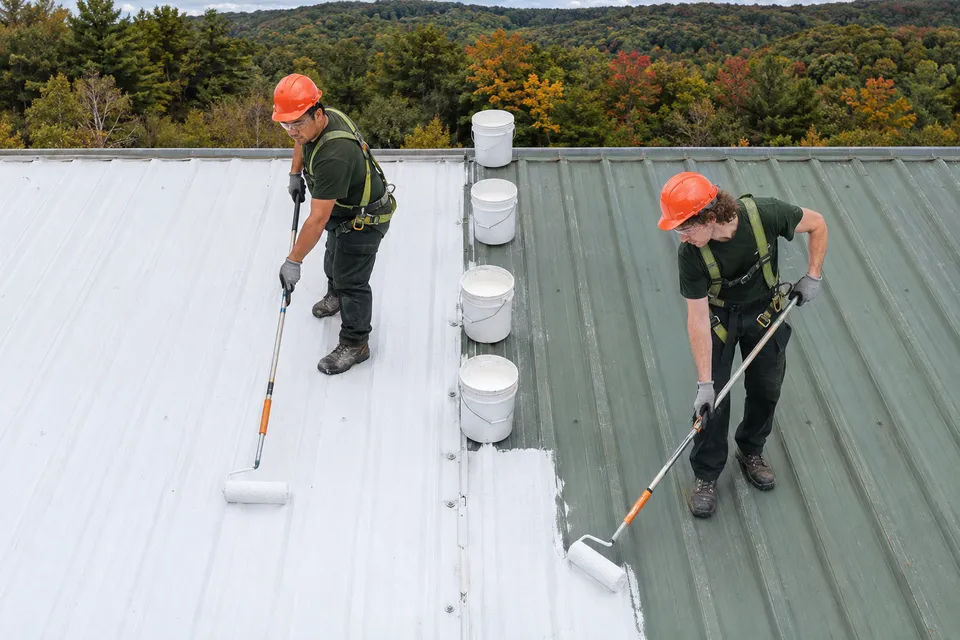
Pitched Metal Roofs
As a Danbury acrylic roof coating contractor, we roll and spray reflective acrylic on commercial metal roofs that shed water quickly.
Danbury acrylic roof coating needs a roof that drains and a dry, mild stretch of weather. Here is how to tell.
| Roof Detail | Good For Acrylic | Pick Another System |
|---|---|---|
| Slope | Pitched panels that shed rain | Flat areas that hold water |
| Season | Late spring through early fall | Cold or damp months |
| Surface | Steel with surface rust, primed | Silicone already on the roof |
| Exposure | Open roof in full sun | Heavy shade and constant moisture |
| Recoat Plan | Acrylic again in later years | No plan to clean or inspect |
Acrylic jobs start by fixing these conditions so the water-based coat cures on a tight, clean roof.
Acrylic covers pitched metal well. Other parts of a property may need one of these systems.
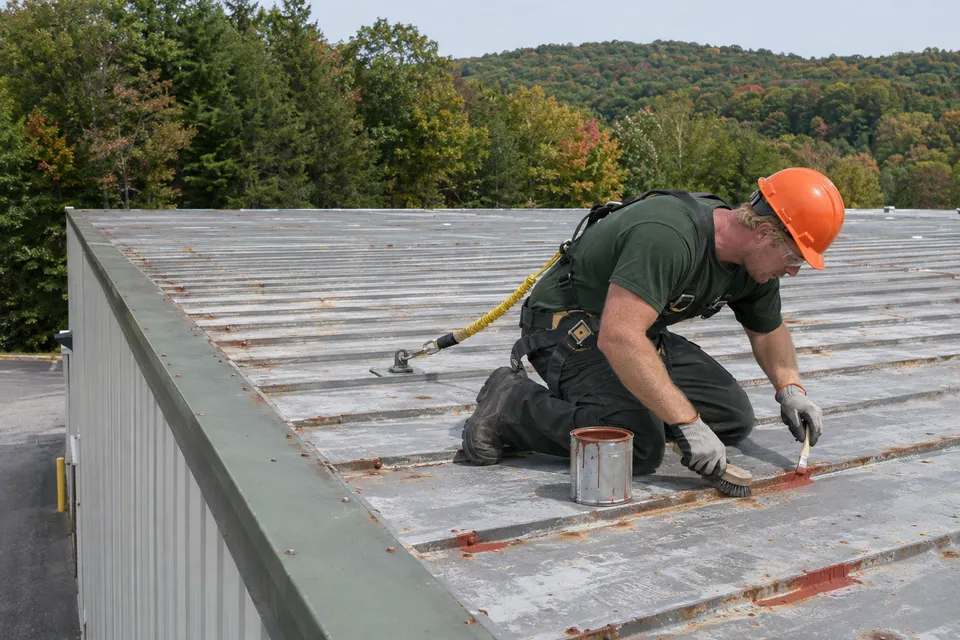
The full restoration path for steel roofs with heavy rust, loose screws, and failed trim.
Commercial metal roof coating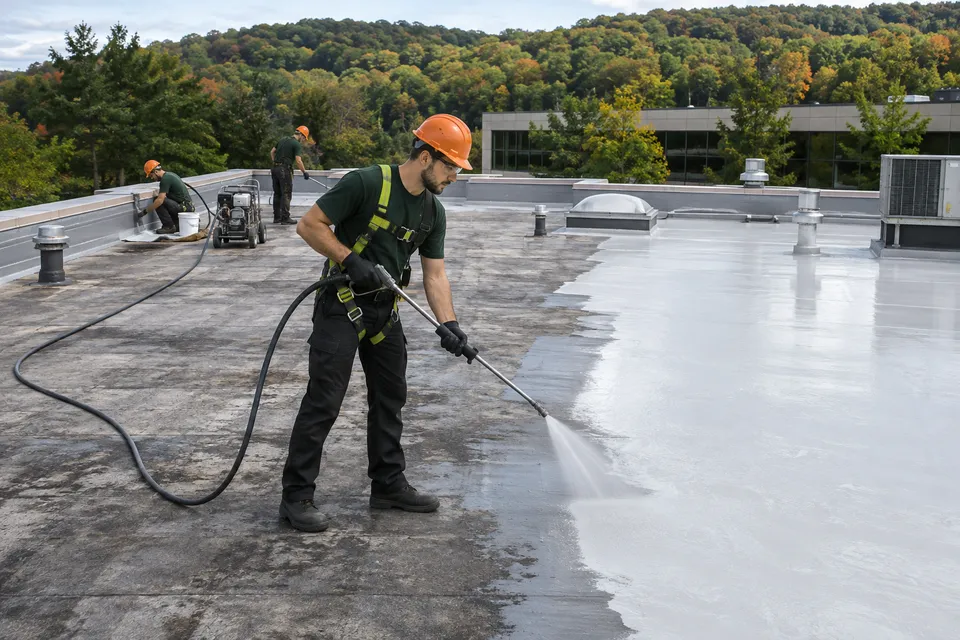
Flat or low sections that hold water need silicone, since acrylic would soften and wear early.
Silicone roof coating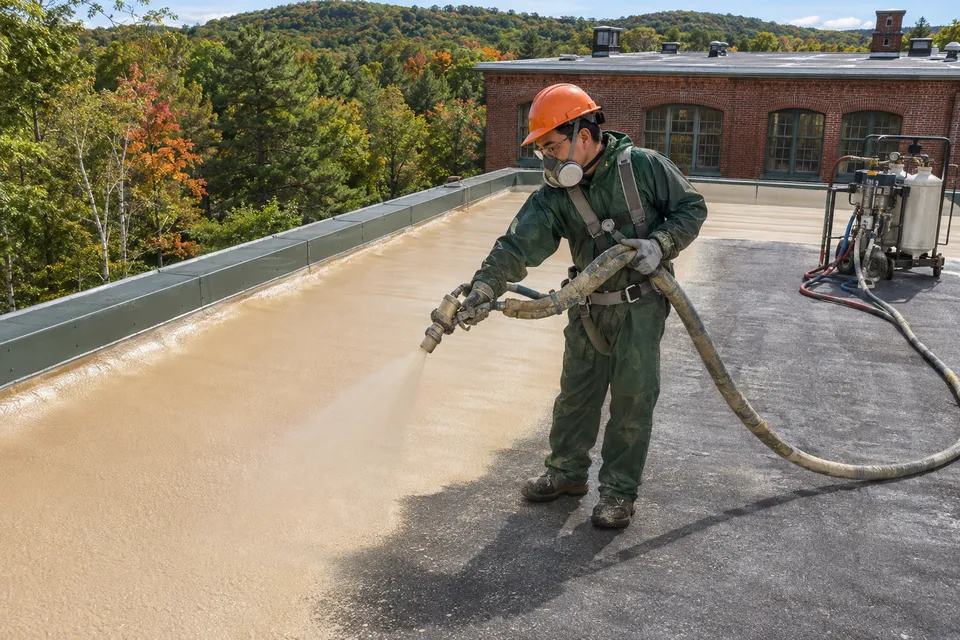
Buildings that need insulation added along with a waterproof surface take foam with a topcoat.
Spray foam roofing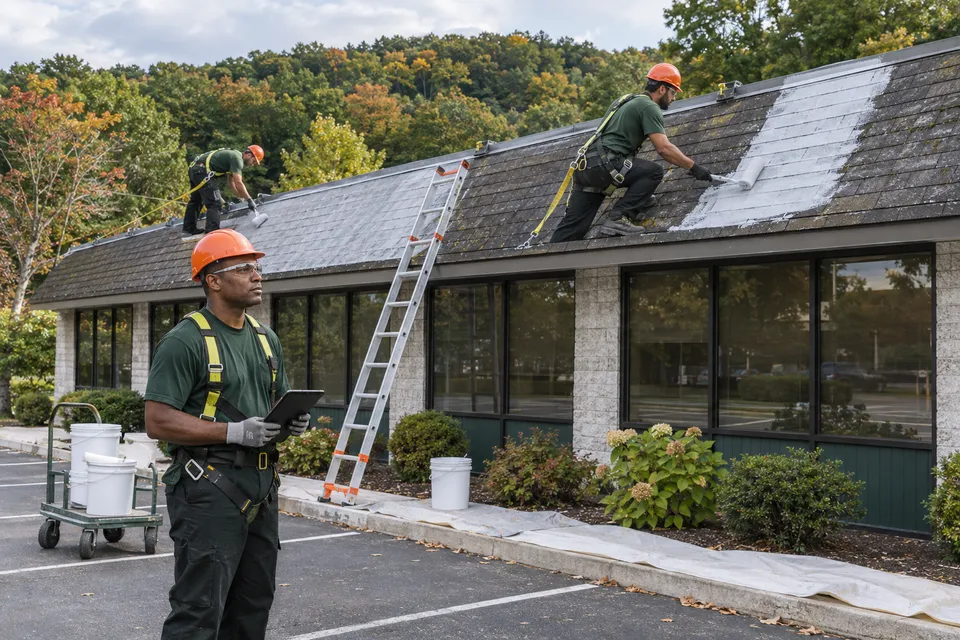
For commercial shingle mansards and canopies that still hold their granules.
Shingle roof coatingOn pitched metal that drains, acrylic gives a reflective, recoatable surface.
A white acrylic finish bounces summer sun off the panels.
New acrylic bonds to old acrylic after a wash, keeping future work simple.
Low odor during application suits occupied offices and shops.
Fabric at seams and laps adds strength where panels move.
Primer plus acrylic keep moisture off steel with surface rust.
The existing panels stay, and the building stays closed to weather.
Rolling and spraying cause little noise or disruption inside.
Cleaning and inspection let a recoat be planned before steel shows.
Chalky, faded metal is a good acrylic candidate if it drains well. Start the estimate and plan the work for warm weather.
Get A Free Ballpark EstimateHave These Ready
Acrylic cures by drying, so the schedule matters as much as the steps.
We check slope and drainage, mark flat spots that pond, count failed screws, and look at every lap and curb the acrylic will cover.
Work is booked for dry days with mild nights, because acrylic needs time above the maker's temperature limit to cure.
Screws are replaced, and laps and curbs get fabric embedded in mastic so the coating has strength where panels move.
Chalk and dirt are washed off, the roof dries completely, and rust-inhibiting primer covers rusted steel.
A base coat and finish coat are rolled or sprayed, each allowed to dry, with thickness checked across the roof.
Mixed roofs often combine acrylic with another system.
Low additions and porch roofs that pond take silicone while the pitched roof takes acrylic.
Silicone roof coatingRoofs with heavy rust and failed trim go through the complete metal restoration first.
Commercial metal roof coatingA shingle band on the same building gets a coating made for shingles.
Shingle roof coatingWhat owners ask about acrylic on Danbury metal roofs.
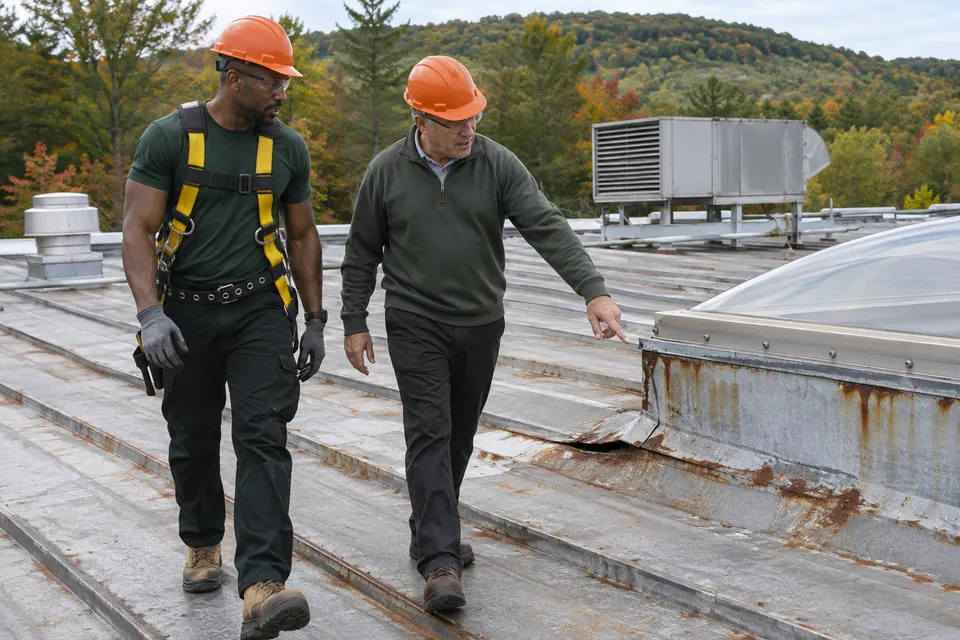
Most Asked
Acrylic handles standing water poorly and needs mild, dry weather to cure. In Danbury that limits the work season to late spring through early fall and rules acrylic out for low spots that hold water after storms. On roofs that drain well it stays a practical, reflective choice.
Acrylic falls inside the ballpark of about $2.50 to $4.00 per square foot of roof area, with replacement at about $5 to $8 per square foot for comparison. Primer, the number of coats, seam and fastener detail, and lift or staging access set the final price after a visit.
Acrylic lasts longest on roofs that drain fully and were coated in good curing weather. Thin coats, ponding, and dirt shorten its life, so we apply it to the specified thickness, keep it off low areas, and suggest a cleaning and inspection schedule so a recoat comes before bare metal shows.
Most systems need dry surfaces and temperatures inside the maker's limits, so cold, damp months are a poor fit, and acrylic is the most sensitive. Silicone allows more room but still needs dry metal with no frost or dew. Urgent winter leaks get temporary repairs until coating season.
Yes. Many offices have metal roof sections, canopies, or equipment areas that take acrylic well. Work is planned around tenants, HVAC intakes, and parking, with spray limits in wind so coating stays off cars and windows, and rooftop units get flashing work first.
Acrylic is water-based, so odor is low compared with solvent coatings. We still keep spraying away from fresh-air intakes and coordinate with building staff so units can be adjusted while the coat dries.
Yes, if the low spots are treated separately. Areas that hold water after rain get silicone or a built-up repair so water leaves them, and the acrylic covers the pitched panels that drain. The two coatings meet at a lap line that is primed and reinforced.
Tell us about the roof's pitch and size, and we will schedule an inspection and a dry-weather coating window.