Scraped Lower Panels
- You See
- Bare streaks and scratched paint on the last few feet above the eave.
- What It Means
- Sliding snow carries grit that wears the finish. Those panels get primed and receive a heavier build of coating than the upper field.
New Milford, CT Commercial Metal Roofs
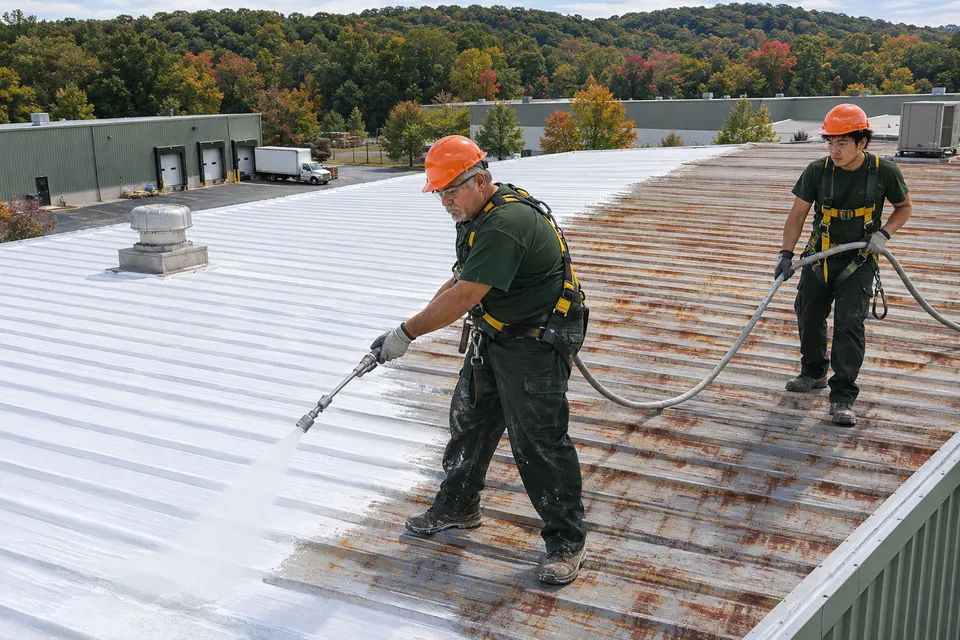
As a New Milford metal roof coating contractor, we reinforce eaves, valleys, and gutter edges, then coat commercial metal roofs so snow and ice slide over sealed steel.
Snow And Ice At The Edge
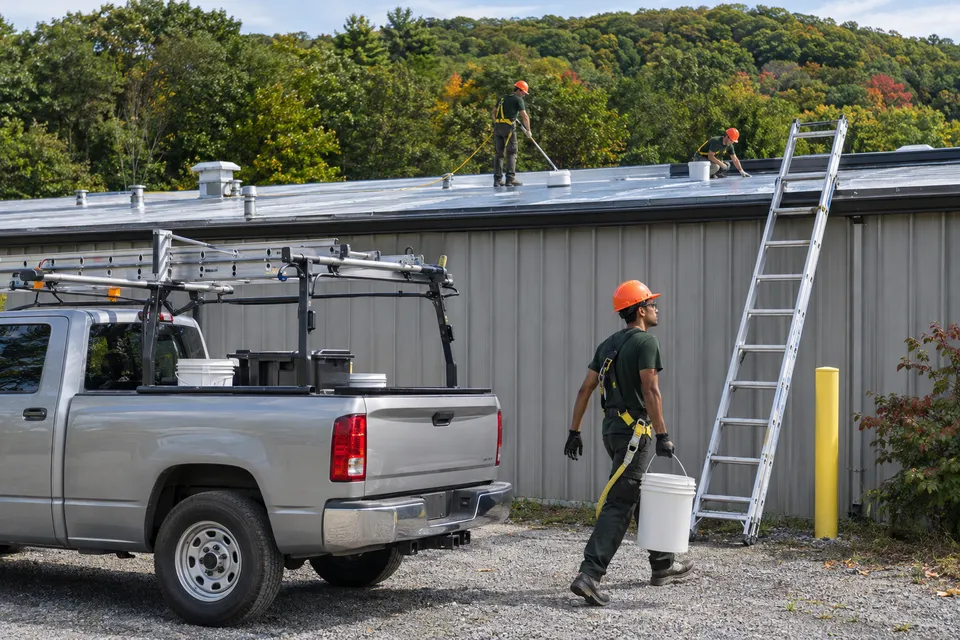
On a New Milford metal roof coating job, the eave gets more attention than any other part of the roof. A sheet of snow that lets go drags grit and ice across the lower panels, and ice dams in the gutter lift the trim.
We add extra coating thickness along the bottom few feet of each slope, embed fabric at valley seams, and refasten gutters and snow guards so they hold the load in place.
Winter leaves a clear pattern on New Milford commercial metal roofs. These are the edge and valley problems we look for first.
A coated New Milford metal building holds up better at the edges, where winter does most of its damage.
Extra mils at the lower slope stand up to the scraping of sliding snow.
Fabric-reinforced valley seams stay sealed while ice sits in them for weeks.
Refastened hangers and a sealed back edge keep meltwater moving off the roof.
Snow guard screws sit under coating, so their holes stop wicking water.
Primed cut edges at the eave resist the rust that wet winters bring.
Stopping edge and valley leaks keeps water off stored goods and wall insulation.
Light-colored coatings bounce summer heat off steel panels and roof trim.
Panels stay on the building, which avoids tear-off and disposal costs.
We match the coating system to how a New Milford roof sheds snow, where water collects, and what the surface is made of.
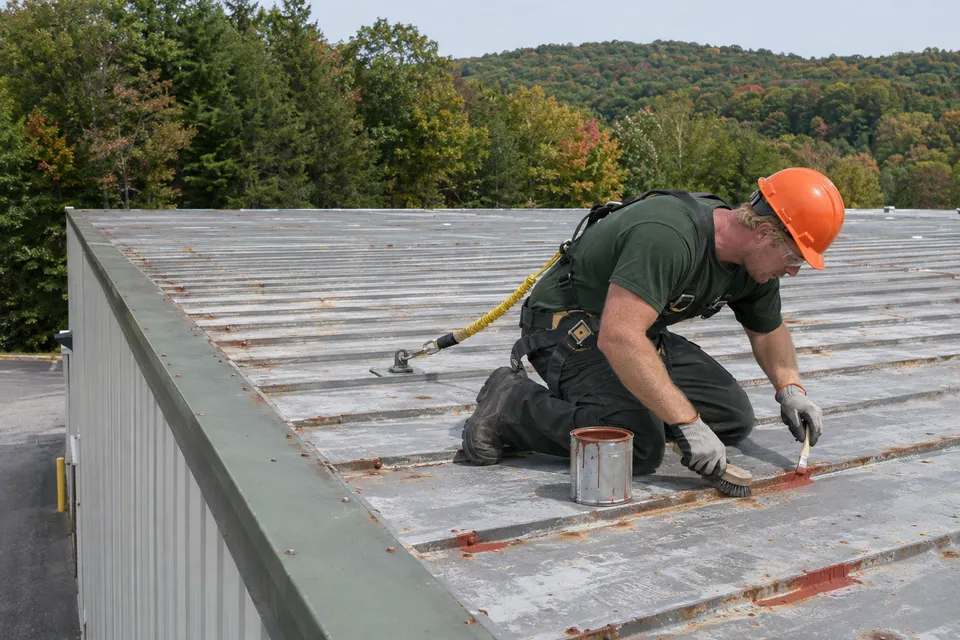
Primer and elastomeric coating over the whole steel roof, with heavier passes at eaves and valleys. It fits warehouses and shops in New Milford where snow slides hard off pitched panels each winter.
Commercial metal roof coating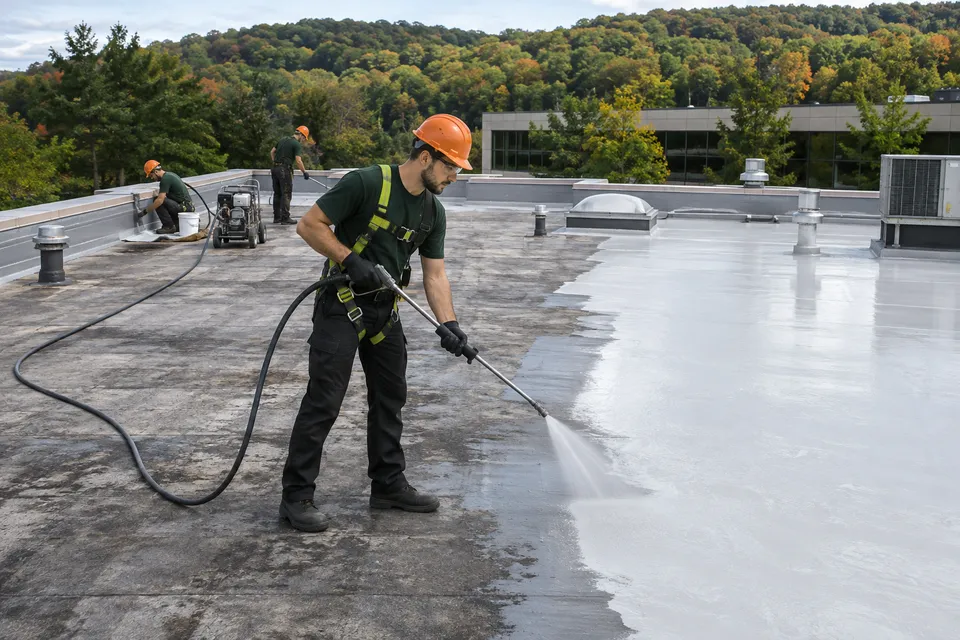
Resists standing water, so it works on low-slope sections where ice dams hold meltwater at the gutter. Future recoats need silicone again, which belongs in the long-term roof plan.
Silicone roof coating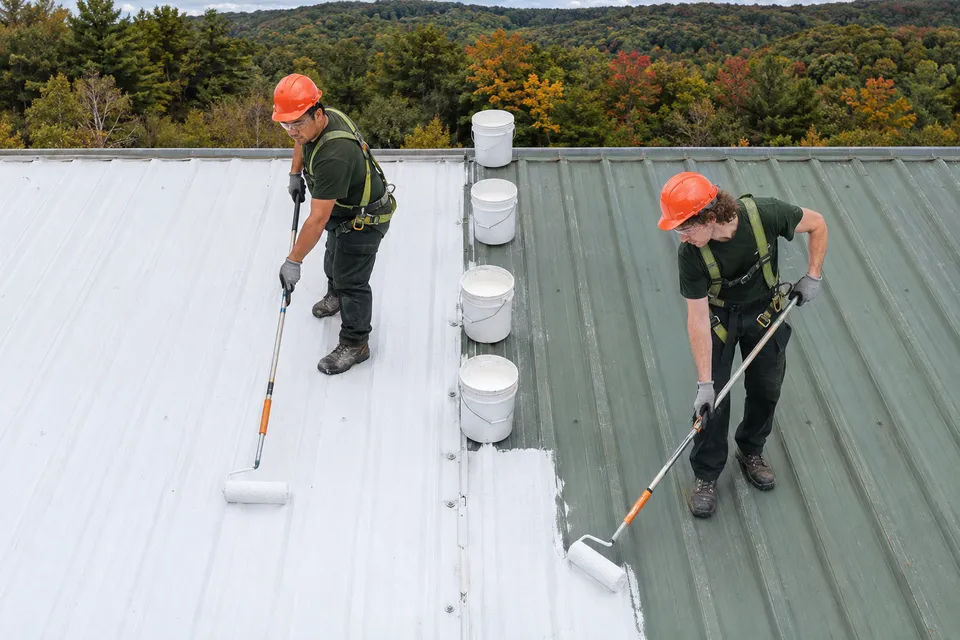
Bright and water-based, it performs on steeper panels that shed snow and rain quickly. We apply it in warm months so each coat dries before cold nights bring dew.
Acrylic roof coating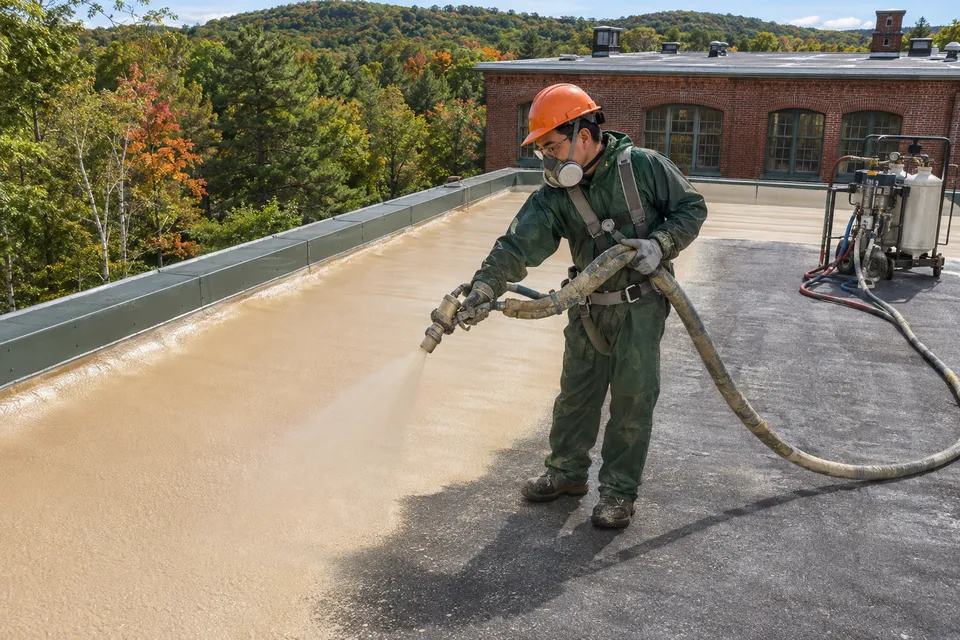
Foam insulates the roof deck, which cuts the heat loss that melts snow and refreezes it as ice at the eave. A protective coating goes over the foam once it sets.
Spray foam roofing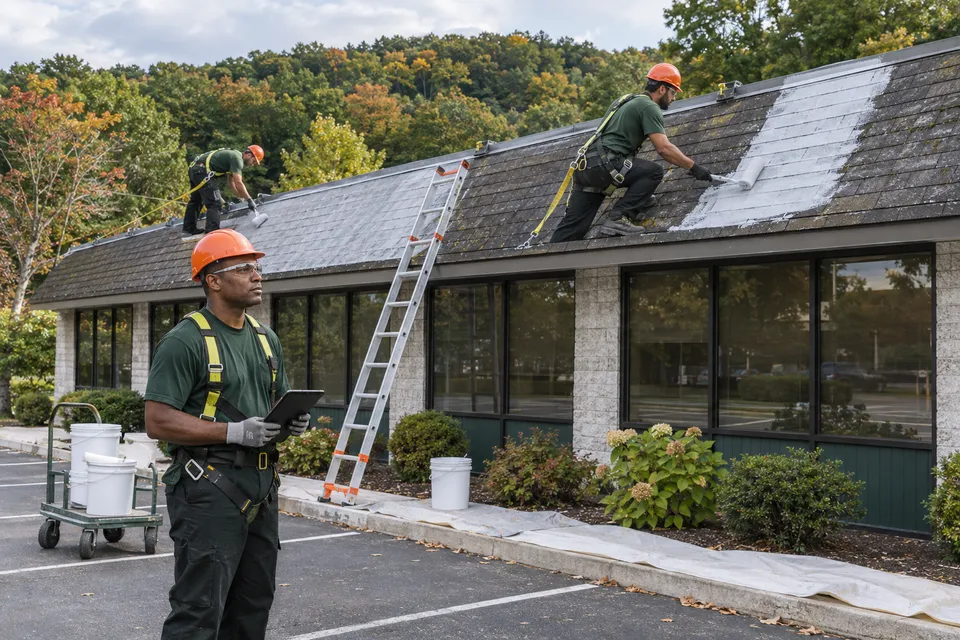
Covers shingle sections on commercial buildings, such as mansards or entry roofs, that still lie flat. Shingles torn by ice at the lower edge get replaced before any coating.
Shingle roof coatingGutters that sag after a thaw often mean water is already getting under the trim. Tell us which side of the building it happens on and we will start there.
Get A Free Ballpark EstimateHave These Ready
Every New Milford roof follows the same five steps, with extra time spent at the edges.
We walk each slope and look closely at the eaves, valleys, gutters, and snow guard mounts, marking scraped paint, loose hangers, rusted panel ends, and any seam that shows staining underneath.
Gutters get new hangers, eave trim is refastened, and snow guard brackets receive fresh screws with sealant. Stripped holes take oversized fasteners so nothing pulls loose under the next snow load.
Pressure washing clears grit from the lower panels, wire brushes remove flaking rust at cut ends, and a rust-inhibiting primer covers every patch of bare steel before coating starts.
Valleys receive fabric set into a base coat first. Then base and finish coats go over the field, with extra passes along the bottom of each slope where snow wears hardest.
Wet film gauges confirm the specified mil thickness across the roof, with added readings at eaves and valleys, since those areas need the heavier build to hold up through winter.
Beyond New Milford, we coat commercial metal roofs in these surrounding towns.
Questions owners of New Milford commercial metal buildings ask about snow, ice, and coating.
Most Asked
They wear the coating hardest at the roof edge. Snow sliding off the panels and ice packed into gutters and eaves both stress the coating there. On New Milford buildings we add thickness along eaves, gutters, and valleys and make sure snow guards and gutters are fastened tight. Spring inspections start at those edges.
Yes. We coat commercial metal roofs across New Milford, from warehouses and shops to agricultural and light industrial buildings. The steps match our Danbury work: treating rust, repairing fasteners and seams, and applying a full coating built to the thickness the system calls for.
As a ballpark, coating runs about $2.50 to $4.00 per square foot of roof area, compared with roughly $5 to $8 per square foot to replace. Gutter and snow guard repairs, the number of valleys, rust at the eaves, and roof access move the final New Milford figure, which we set after a site visit.
Yes. We coat the roof one section at a time and keep work away from doors and loading areas while people use them. Ladders and staging go on the side of the building with the least traffic, and gutters and edges are worked from the roof so the ground below stays clear for most of the day.
Ask whether the estimate covers the snow guards, gutters, and eave trim along with the coating. We inspect each guard mount and gutter hanger and include their repair in the scope. Coating over a loose bracket leaves a leak path, so those fixes happen first.
If snow slides onto entrances, parking, or lower roofs, adding guards before coating makes sense. Brackets fastened after the coat would cut through the new membrane. Installing them first lets each mounting screw be sealed and covered during the coating work.
Yes. A scraped or torn spot is cleaned, lightly abraded, and recoated with the same product, blending into the existing membrane. We check eaves and valleys after heavy winters and patch worn areas before they let water reach the steel.
Tell us where snow and ice hit your New Milford roof hardest, and we will schedule a walk of the eaves, valleys, and gutters.