Leaks At Many Laps
- You See
- Drips at so many panel overlaps that sealing them one by one stops making sense.
- What It Means
- Foam covers every lap at once. Loose panels are fastened down first so the foam sits on a stable surface.

Foam Over Metal And Flat Roofs
As a Danbury spray foam roofing contractor, we spray foam over sound decks and metal panels, then seal it with a protective topcoat.
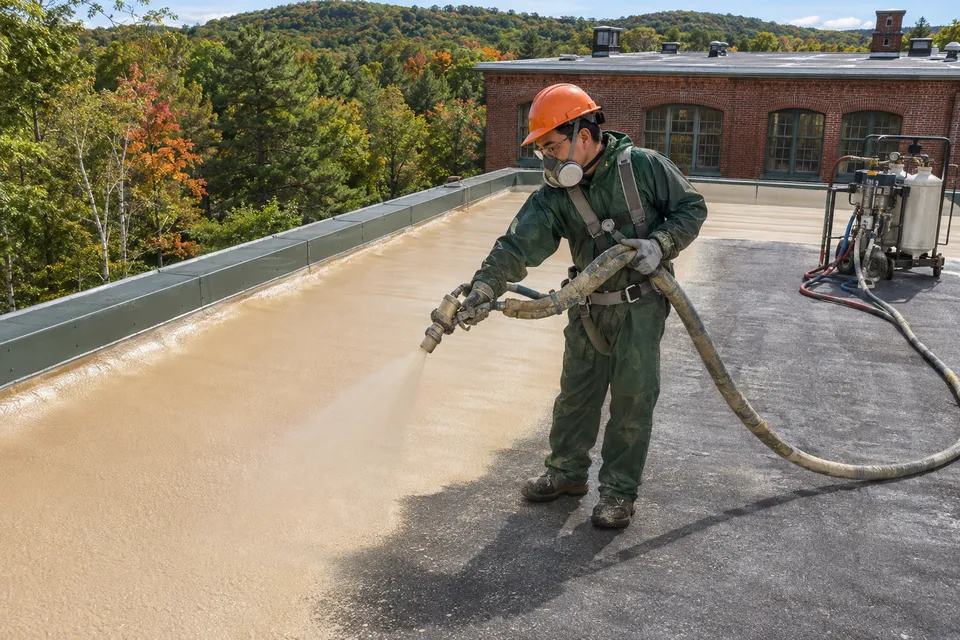
Danbury spray foam roofing fits leaking roofs on buildings that also need insulation. The deck has to be dry and solid first.
| Roof Detail | Good For Foam | Fix Or Rethink First |
|---|---|---|
| Deck Or Panels | Solid steel or deck, firm underfoot | Rusted-through or soft deck |
| Moisture | Dry surface and dry insulation | Wet layers that hold water |
| Building | Cold, drafty, or lightly insulated | Already well insulated and dry |
| Surroundings | Room to control overspray | Cars and intakes right at the edge |
| Upkeep | Topcoat inspected and renewed | No plan for recoating |
Foam solves these problems in one layer, provided each is prepared correctly.
Foam is the heaviest system. When insulation is not needed, a coating alone often fits.
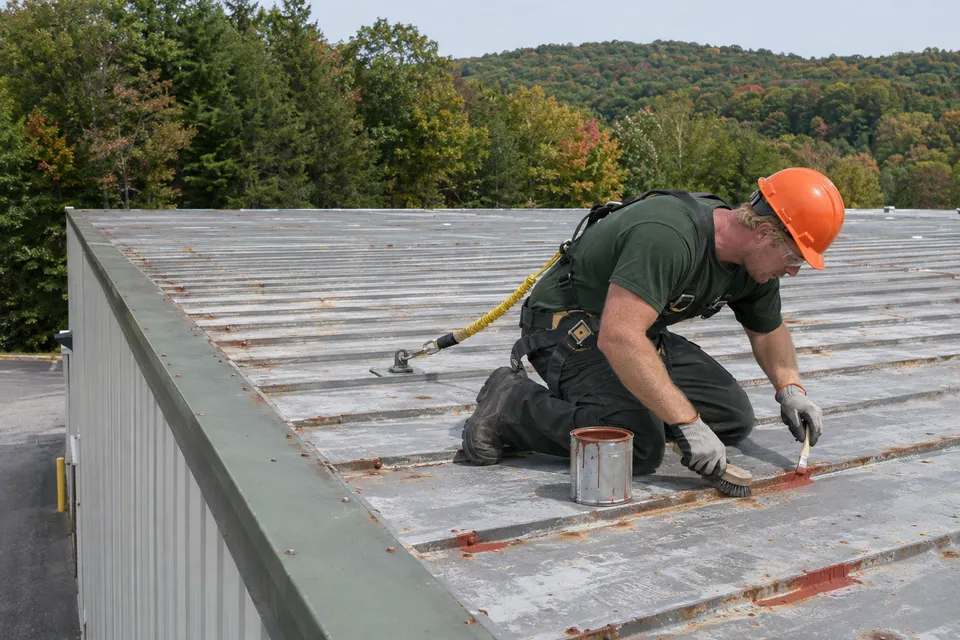
For steel roofs that leak but already have enough insulation below.
Commercial metal roof coating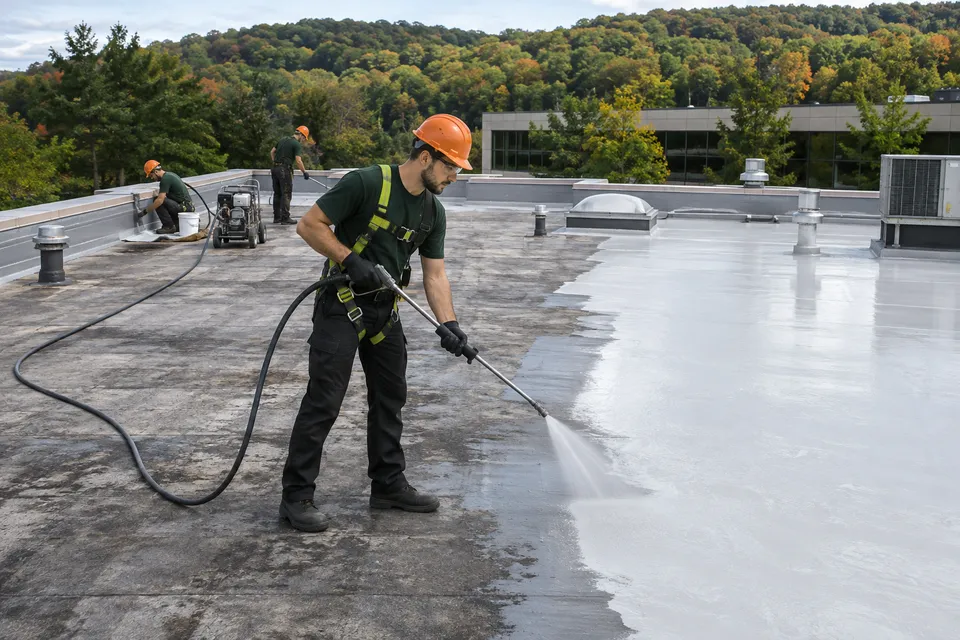
Used as the topcoat over foam, and on its own for low-slope roofs that pond.
Silicone roof coating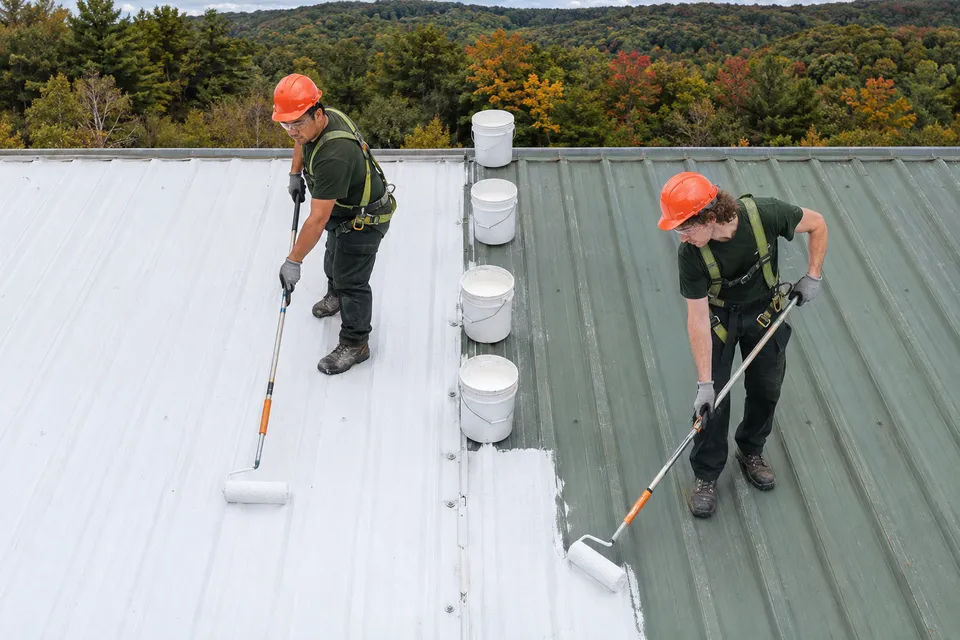
A reflective topcoat option over foam that drains well, applied in warm weather.
Acrylic roof coating
Pitched shingle sections on the same property take a shingle coating, since foam suits flat and low-slope roofs.
Shingle roof coatingSpray foam handles leaks and insulation in the same job.
Foam fills laps, seams, and fastener lines in one continuous layer.
Insulation goes on top of the deck, where it helps cold or lightly insulated buildings.
Warming the panel surface cuts drips from cold steel inside.
Foam can be built thicker toward drains to move water off flat areas.
It adds little weight compared with a new roof assembly.
A coating over the foam blocks sunlight and wear.
Renewing the topcoat keeps the foam itself in service.
Work happens above the deck while the space below keeps running.
When a metal roof leaks and the building is cold, foam handles both. Start with the roof size and how the building is used.
Get A Free Ballpark EstimateHave These Ready
Foam work depends on a dry deck and careful overspray control.
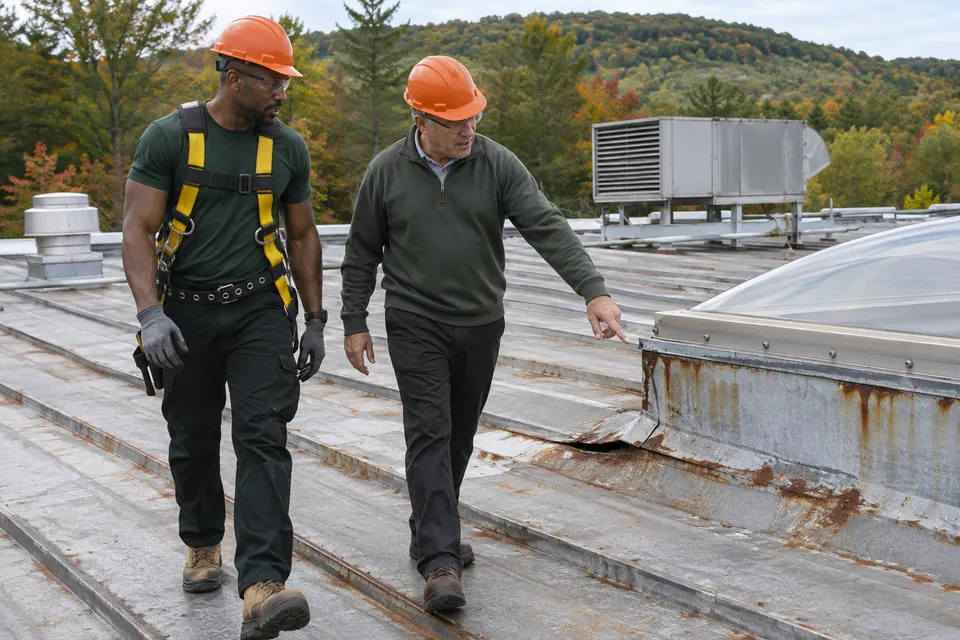
We check the deck or panels for rust-through, core the existing roof for moisture, and plan foam thickness and overspray protection for nearby cars and intakes.
Loose panels are fastened, failed metal replaced, wet material removed, and the surface left completely dry before spraying.
Air intakes, windows, and vehicles are covered or moved, and wind is checked through the day to keep overspray on the roof.
Foam goes on in passes to the planned thickness, built up toward drains where the roof needs better slope.
A silicone or acrylic topcoat covers the foam soon after it is sprayed, with thickness readings recorded.
Every foam roof needs a topcoat, and some roofs need no foam at all.
A common choice over foam on flat roofs where water may sit near drains.
Silicone roof coatingA reflective option over foam that drains well, applied in warm weather.
Acrylic roof coatingInsulated buildings with leaking steel roofs often need a metal coating only.
Commercial metal roof coatingAnswers about foam roofs in Danbury.
Most Asked
Foam is priced after measuring the roof and setting the thickness, because thickness drives material and labor. The coating ballpark of about $2.50 to $4.00 per square foot is a starting point, and thicker foam, panel repairs, hard access, and the topcoat all raise it.
It can, by covering seams, laps, and fasteners with one layer, if the panels underneath are solid. Loose and rusted metal is fixed first, foam goes on to the planned thickness, and a protective topcoat finishes it, while the foam adds insulation above the deck.
When the topcoat wears thin, chalks heavily, or exposes foam. Sun, foot traffic, hail, and snow removal all wear it, so we check foam roofs for thin spots, blisters, and damage near rooftop units and recoat before sunlight reaches the foam.
A foam roof lasts as long as its topcoat is kept intact, since recoating at the right time protects the foam from sunlight and moisture. Snow removal damage, punctures from rooftop work, and bird pecking are the wear points we check most.
Yes, on the flat or metal roof sections of old mill buildings. Mill roofs often mix materials and patches, so we find where metal meets masonry and other roofing and repair the flashing at those transitions before foam goes down.
Only after the wet material is removed. Foam sprayed over wet insulation traps the moisture, so cores locate the wet areas and those sections are cut out and filled before spraying.
Thickness is set per roof, based on how much insulation the building needs and where slope has to be built toward drains. It is marked on the plan before spraying and checked with probes during the work, and the topcoat thickness is recorded separately.
Send us the roof size and how the building is used, and we will plan foam thickness and overspray protection.