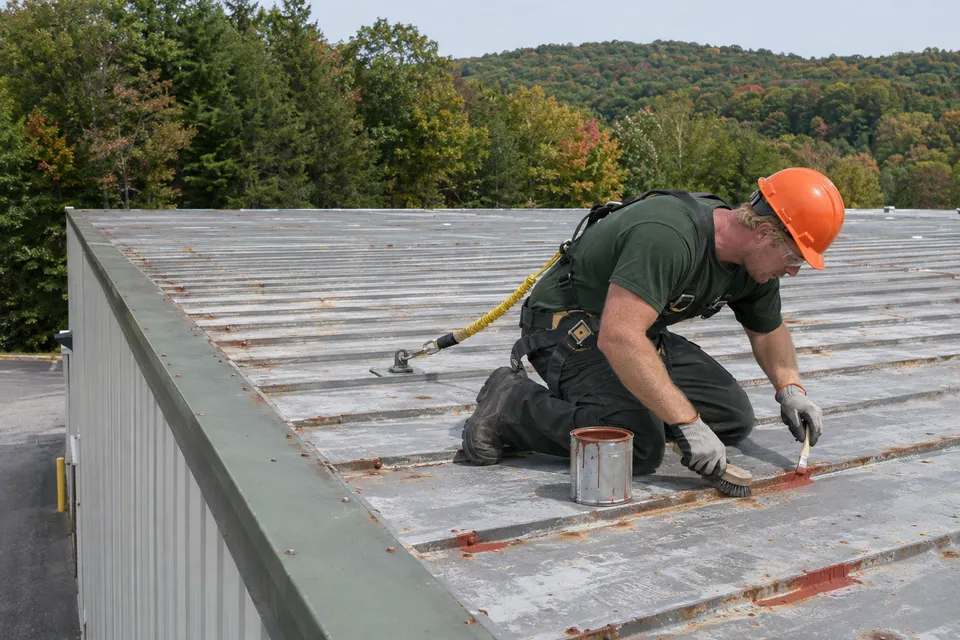
Commercial Metal Roof Coating
Exposed-fastener and standing-seam steel on warehouses, plants, and shops gets this system. Rust is primed and every screw line and lap is sealed before the elastomeric coat.
Commercial metal roof coating
Five Coating Systems
Our metal roof coating services in Danbury cover five systems, each matched to the roof's slope, drainage, and surface before work starts.
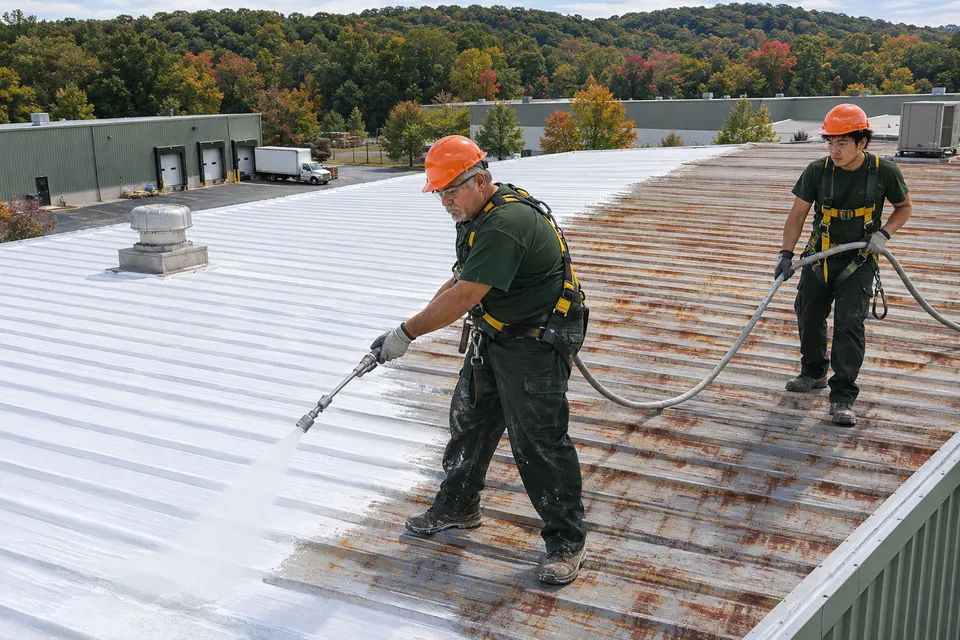
We start with metal roof coating services in Danbury and add the system each roof calls for. Every card names where it fits and what gets checked first.
Exposed-fastener and standing-seam steel on warehouses, plants, and shops gets this system. Rust is primed and every screw line and lap is sealed before the elastomeric coat.
Commercial metal roof coating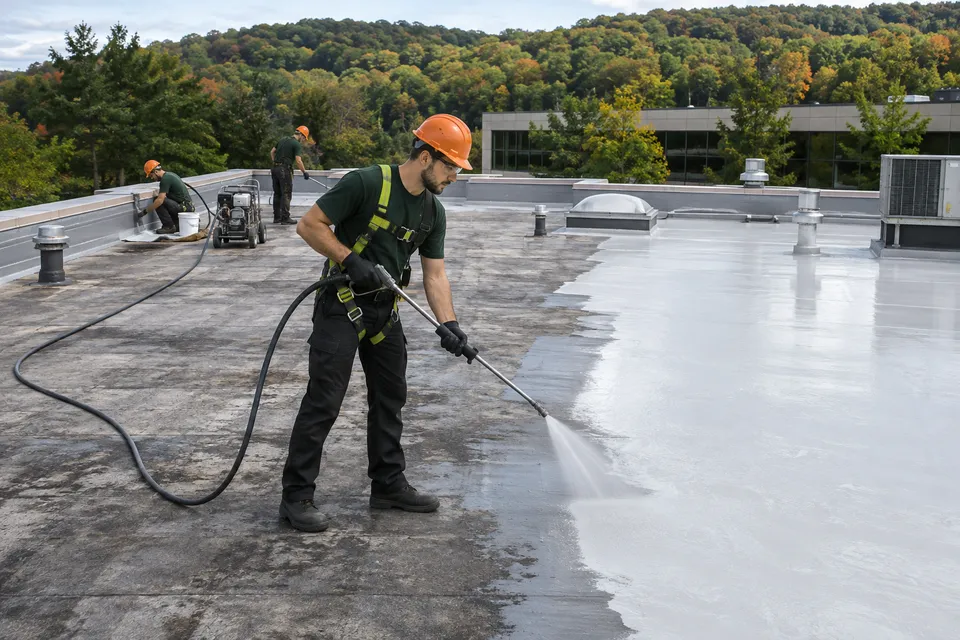
Low-slope roofs with spots that hold water after rain take silicone. Surfaces are cleaned to bare, dry material because silicone only bonds to a clean roof.
Silicone roof coating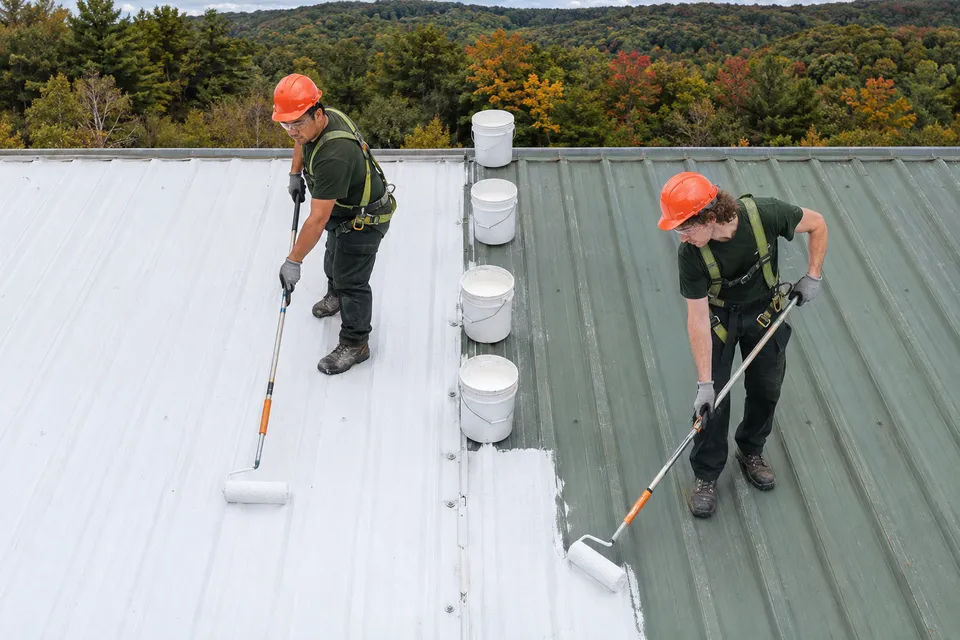
Pitched metal that sheds water quickly suits acrylic. It cures by drying, so jobs are booked in warm, dry weeks and kept off low areas that pond.
Acrylic roof coating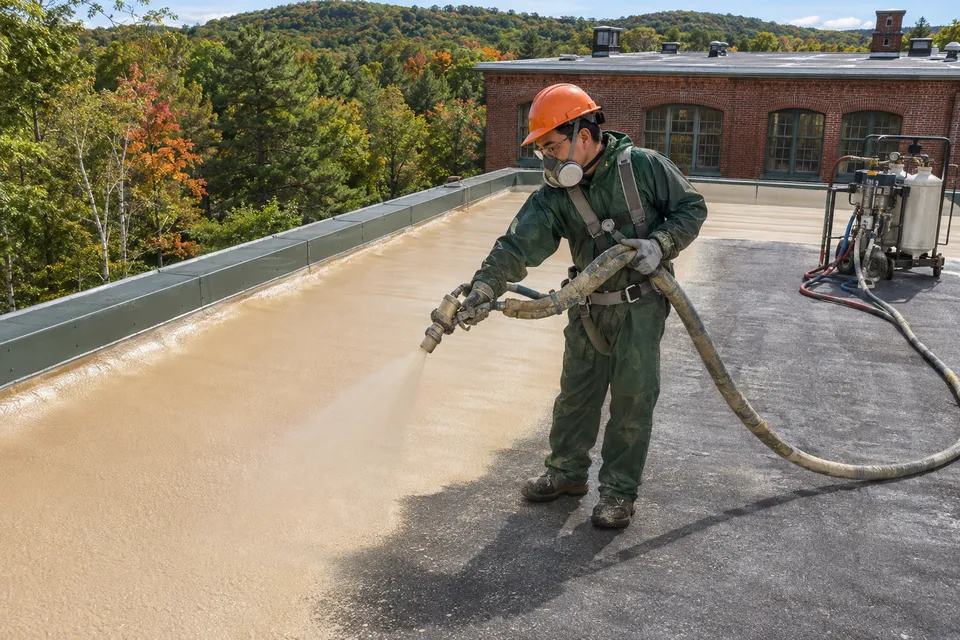
Leaky metal and flat roofs on buildings that also lose heat are foam candidates. Foam thickness is planned for the roof, and a topcoat protects the foam from sunlight.
Spray foam roofing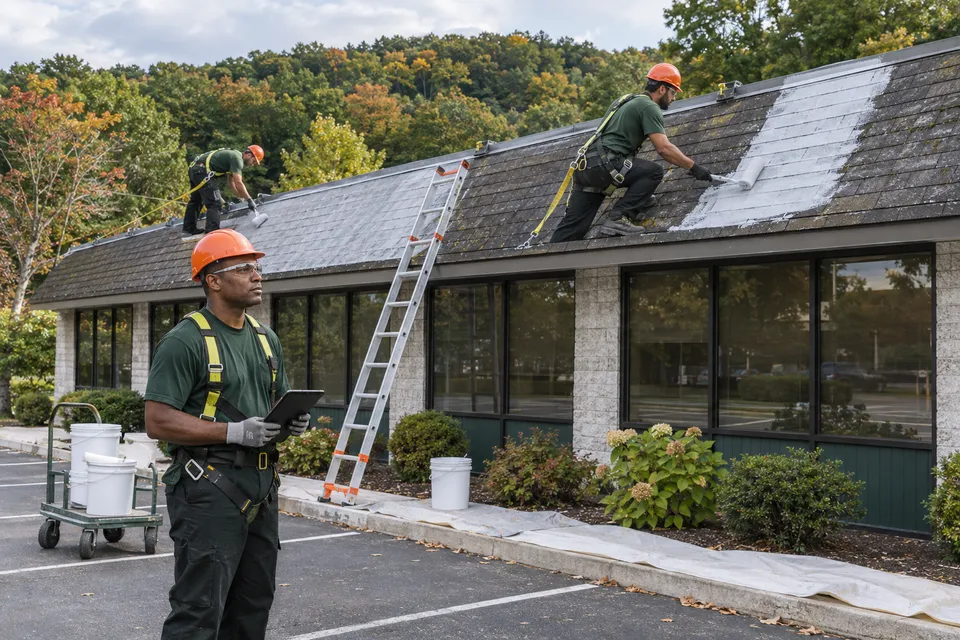
Commercial shingle mansards and canopies qualify when they have flat, granule-covered shingles. Curling, cracked, or soft areas are repaired or flagged for replacement.
Shingle roof coatingA quick way to compare the five systems on the points that decide most Danbury jobs.
| System | Best On | Water Standing | Weather Window | Recoat Path |
|---|---|---|---|---|
| Metal roof coating | Steel panels with surface rust | Short-lived only | Spring to early fall | Same family of coating |
| Silicone | Low-slope metal and flat roofs | Handles ponding | Wider, needs dry roof | Silicone over silicone |
| Acrylic | Pitched metal that drains | Poor fit | Warm, dry weeks | Acrylic recoats easily |
| Spray foam | Leaky, poorly insulated roofs | Handled by the topcoat | Dry deck, mild temps | New topcoat over foam |
| Shingle coating | Flat shingles with granules | Sheds water by pitch | Dry, mild days | Coating made for shingles |
The roof decides the system. Send us its size and what is wrong with it, and the inspection will settle the fit.
Get A Free Ballpark EstimateHave These Ready
Whatever system goes on, the order of work stays the same.
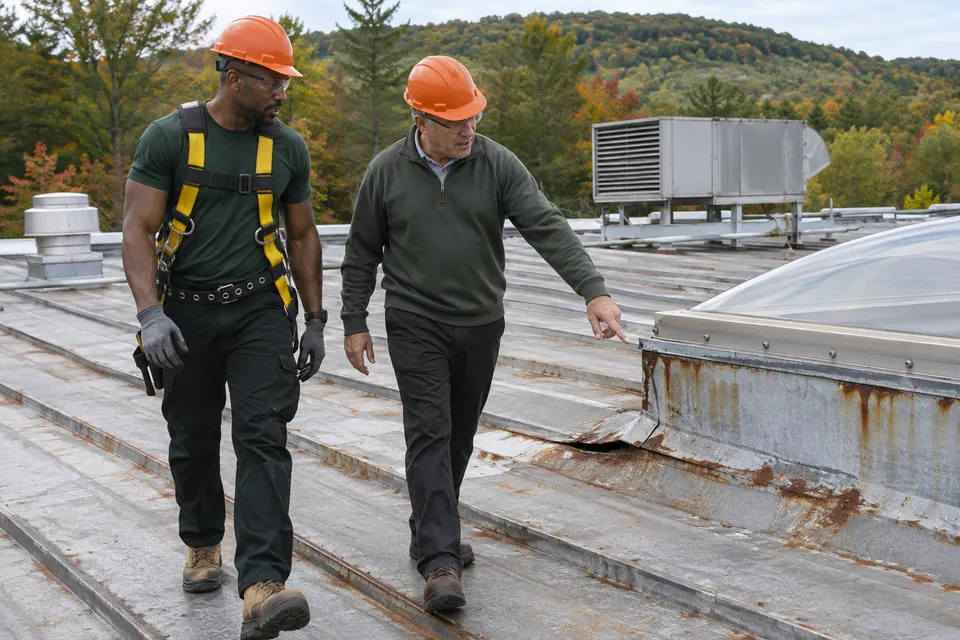
We check the roof type, slope, drainage, and every detail that leaks, then core or probe suspect areas to see whether the insulation underneath is dry.
Slope, standing water, the existing surface, and the season of the work point to metal, silicone, acrylic, foam, or shingle coating.
Loose fasteners, open seams, cracked skylights, and failed curb flashing are fixed so the coating covers a tight roof.
Material goes on at the rate the maker specifies, with detail work first and the field coats after.
Readings, photos, and the system name are handed over so later inspections and recoats start with facts.
Common questions when owners compare one system against another.
Most Asked
The roof decides. Steel panels with surface rust take a metal roof coating; spots that hold water after rain point to silicone; pitched metal that drains fast suits acrylic; a leaky, cold building may call for spray foam; and flat, granule-covered shingles can take a shingle coating. The inspection settles it.
Yes, on separate sections. A building with a pitched metal main roof and a flat low-slope addition can take acrylic on the pitched panels and silicone on the flat section, with the transition flashed so each system ends on a clean edge.
The repairs are the same: loose screws replaced, open seams sealed, and rust primed. Cleaning differs, because silicone needs a spotless, dry surface, acrylic needs warm drying weather, and foam needs a dry deck before spraying.
Any coated roof can be scraped by shovels and blades, so the system matters less than how snow is removed. We suggest plastic shovels, leaving a thin layer of snow on the surface, and marking walk paths to the rooftop equipment.
Usually, if the old coating still bonds. We test adhesion in a few spots, clean the surface, and choose a compatible coating. Silicone takes only silicone; acrylic and most metal coatings can be recoated with the same type.
Tell us about the roof, and we will inspect it and recommend the one system that fits.