Rust Bloom On Panel Faces
- You See
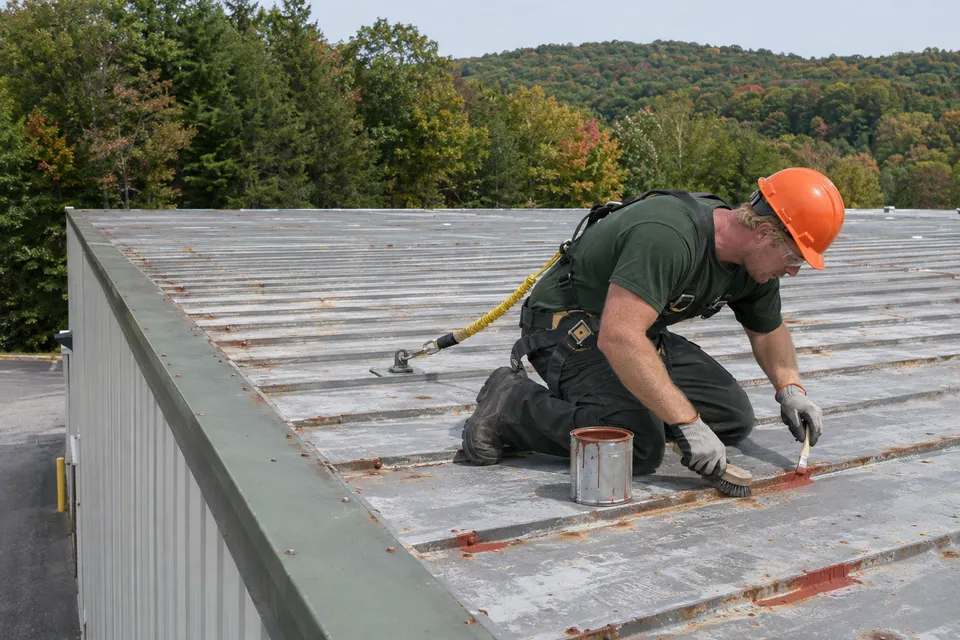
- Chalky gray paint with orange spots spreading across the panel ribs.
- What It Means
- The factory finish has worn through. Scale is brushed off and a rust-inhibiting primer seals the bare steel.
Steel Panel Roofs
As a Danbury commercial metal roof coating contractor, we prime rust, replace failed screws, seal every lap, and coat the panels in place.
Danbury commercial metal roof coating works on steel that is still solid. Compare your roof with both columns before planning the job.
| Roof Detail | Ready To Coat | Fix First |
|---|---|---|
| Panels | Surface rust, firm underfoot | Holes, flex, or daylight at laps |
| Fasteners | Tight with intact washers | Stripped, spinning, or missing |
| Laps And Seams | Closed and clean | Gapped, rusted, or packed with dirt |
| Insulation | Dry under the panels | Wet or sagging between purlins |
| Trim And Caps | Fastened along every run | Lifted, bent, or rattling |
Each of these gets repaired before the coating goes on, because coating covers a surface and holds nothing together.
Steel panels can take more than one finish. These four systems cover the roofs that do not suit a standard metal coating.
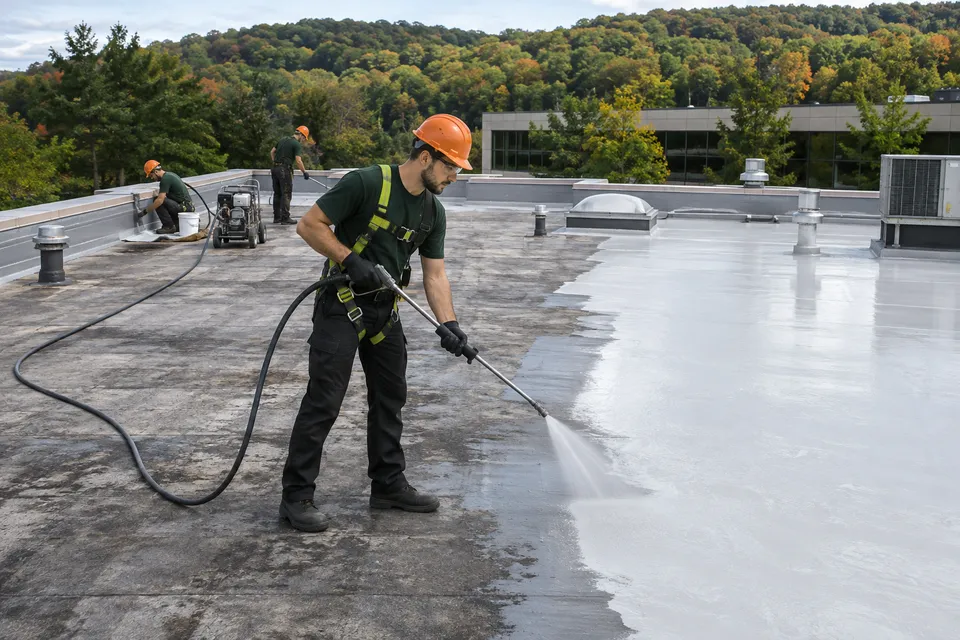
Low-slope metal with spots that hold water is where silicone fits. It resists standing water better than other coatings, though later recoats must be silicone too.
Silicone roof coating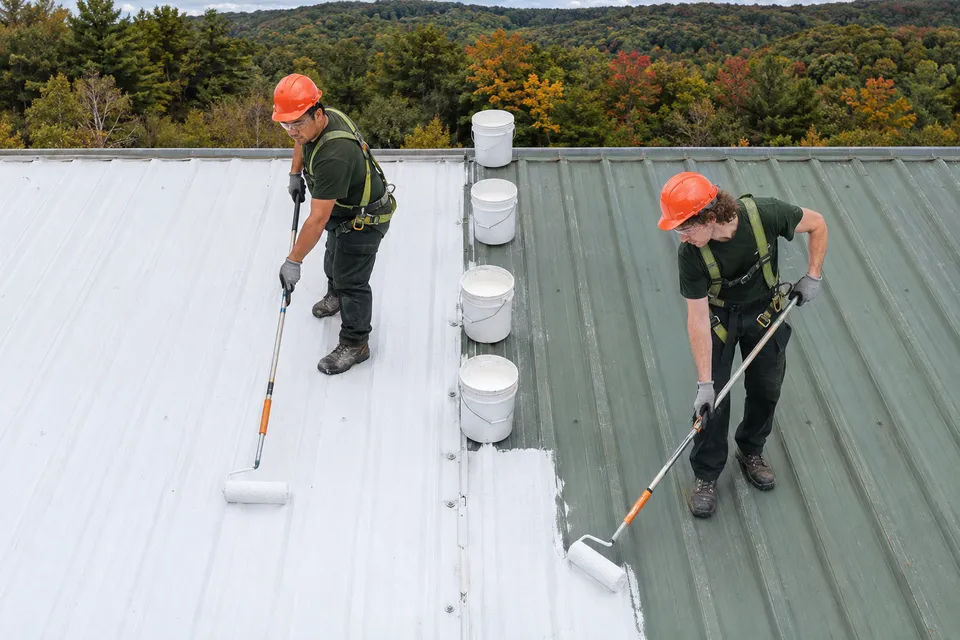
Pitched panels that shed water quickly suit acrylic. Reflective and easy to recoat, applied only in warm, dry weather.
Acrylic roof coating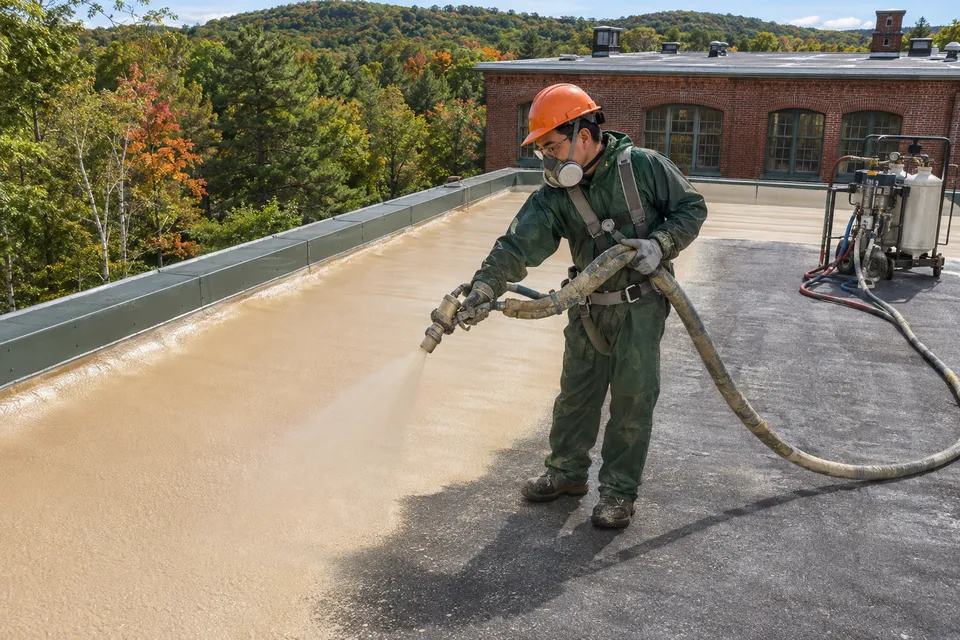
Metal buildings that leak and lose heat can take foam, which covers seams and fasteners in one layer and adds insulation above the panels.
Spray foam roofing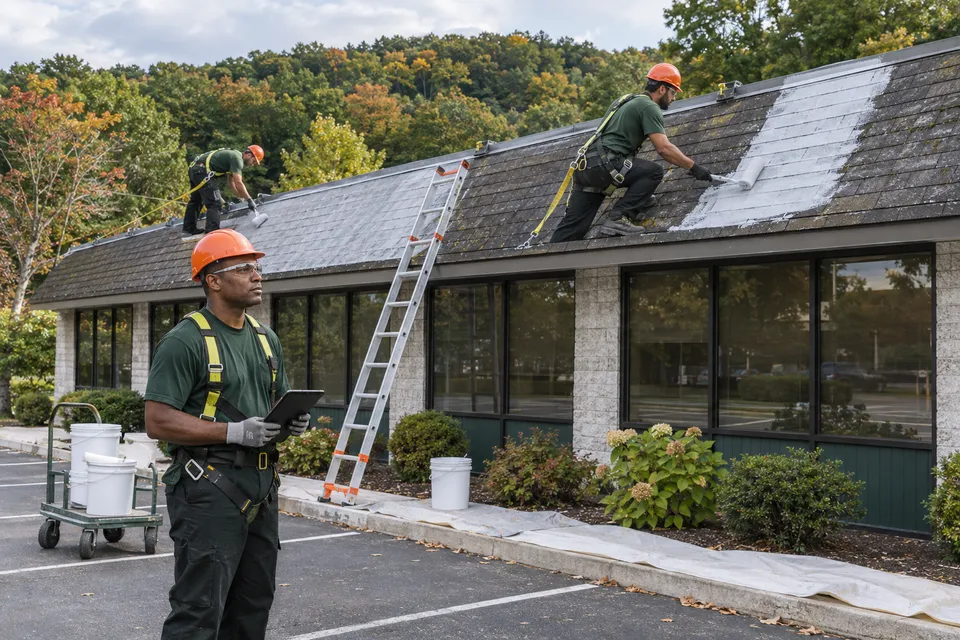
Shingle sections often sit on the same property, such as a mansard on the office wing beside a metal shop.
Shingle roof coatingCoating steel panels in place gives an aging metal roof a new weathering surface while the structure stays put.
Every fastener head is covered, so the screw line stops being a leak line.
Taped and coated laps keep wind-driven rain out of panel overlaps.
Rust-inhibiting primer under the coat slows corrosion on solid panels.
Purlins, panels, and trim remain, so the building is never opened to weather.
Light coating colors reflect summer sun off dark, weathered steel.
Work moves section by section while operations continue inside.
The roof can be cleaned and recoated later rather than torn off.
Counts of replaced screws and panels go to the owner after the job.
Loose fasteners across a whole roof usually mean the roof is ready for restoration. Start with the roof size and where it leaks.
Get A Free Ballpark EstimateHave These Ready
Restoration of a steel roof follows these five steps.
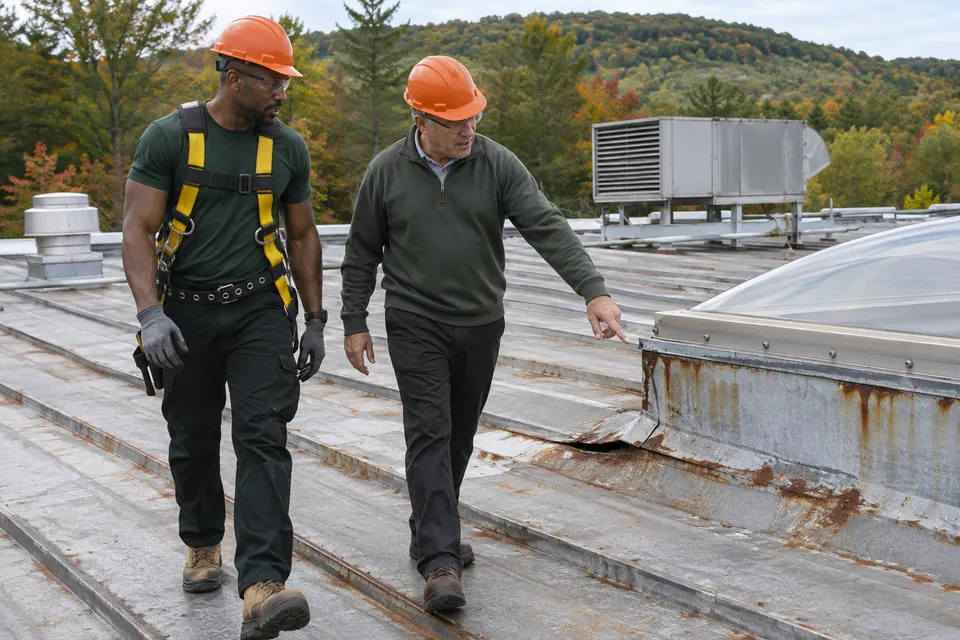
We walk each panel run, test fasteners by hand, look into laps and gutters, and mark any panel that flexes, shows holes, or sits over wet insulation.
Rusted-through panels and broken trim are cut out and replaced with matching profiles so the roof is solid before coating.
Stripped screws give way to oversized ones, and laps, curbs, and penetrations are sealed with tape, fabric, and mastic.
Panels are pressure-washed to remove chalk, scale is wire-brushed, and primer goes on every rusted or bare area.
Base and finish coats are sprayed across the field while wet film readings confirm the specified mils everywhere.
Some metal roofs need a different system on part or all of the roof.
Silicone handles the ponding areas near box gutters and rooftop units better than other coatings.
Silicone roof coatingSpray foam over the panels covers seams and adds insulation in the same job.
Spray foam roofingAcrylic suits pitched metal that sheds rain quickly and gets coated in summer.
Acrylic roof coatingWhat owners ask about restoring steel roofs.
Most Asked
Plan on roughly $2.50 to $4.00 per square foot of roof area as a ballpark. Rust and seam prep, the number of screws replaced, the system, the specified mil thickness, roof size, and access move a roof within that range, and a site visit sets the final price.
Rust work comes first and decides how well the coating holds. Loose rust and chalk come off, panels are cleaned so primer can bond, and rust-inhibitive primer covers bare and rusted steel, with extra care at end laps, gutters, and rooftop units where moisture lingers.
Yes, once the details are fixed. Stripped and rusted screws are backed out or replaced, oversized screws go where holes have grown, and every fastener head and side lap is sealed with mastic or tape before the full coat, which keeps the screw lines from leaking again.
It makes sense when the panels and framing are solid and the trouble is rust, leaking seams, and loose screws. Tear-off is avoided and the roof stays in place, but widespread rust-through, a damaged deck, or soaked insulation point to replacement instead.
Restoration brings an aging steel roof back into working order without replacing it: cleaning, rust treatment, fastener replacement, seam and flashing repair, replacement of badly damaged panels, and a full coating. The structure stays, and the weathering surface is renewed.
Yes. Hard wind works on loose screws, lifts panel edges, and pulls at ridge caps and trim, and a coating seals the surface without holding loose metal down. Loose panels, edges, and trim are refastened and missing screws replaced before the first coat.
Connecticut's 2022 State Building Code, based on the 2021 International Codes, applies to permit applications filed from October 1, 2022. The City of Danbury Building Department administers it, and we check the scope of a coating job with the department before work begins.
Send the roof size and leak spots, and we will inspect the panels and price the repairs and coating together.