Open Party Wall Flashing
- You See
- Gaps where the roof meets a neighboring building's wall, with streaked siding.
- What It Means
- Counterflashing has pulled away from the wall. It is refastened and sealed so the coating can tie into a tight joint.
Sandy Hook Storefronts And Mixed-Use
As a Sandy Hook metal roof coating contractor, we restore rusted, leaking metal roofs on village storefronts, mixed-use buildings, and entry canopies with tight access.
Tight Access
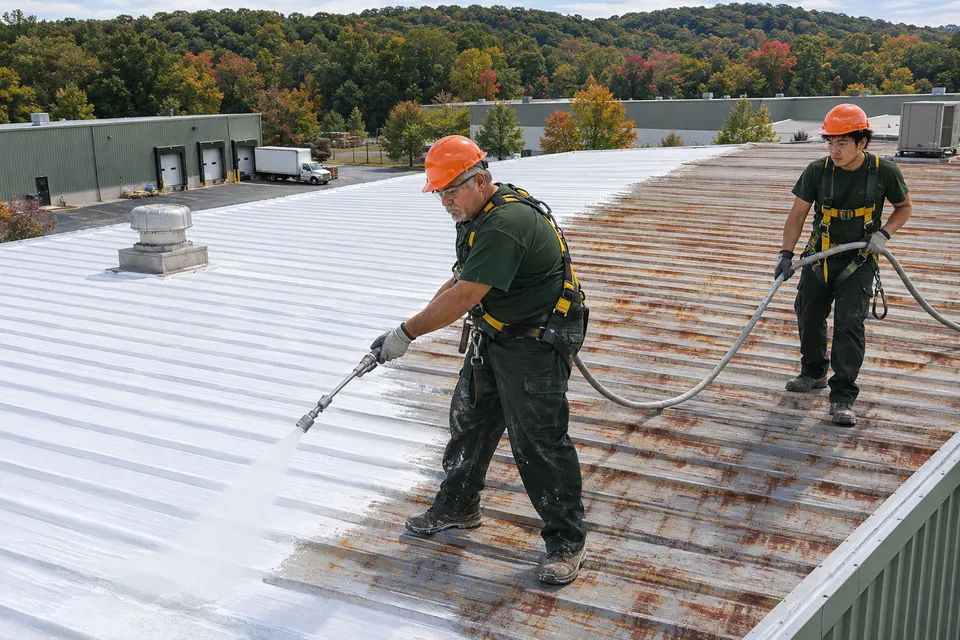
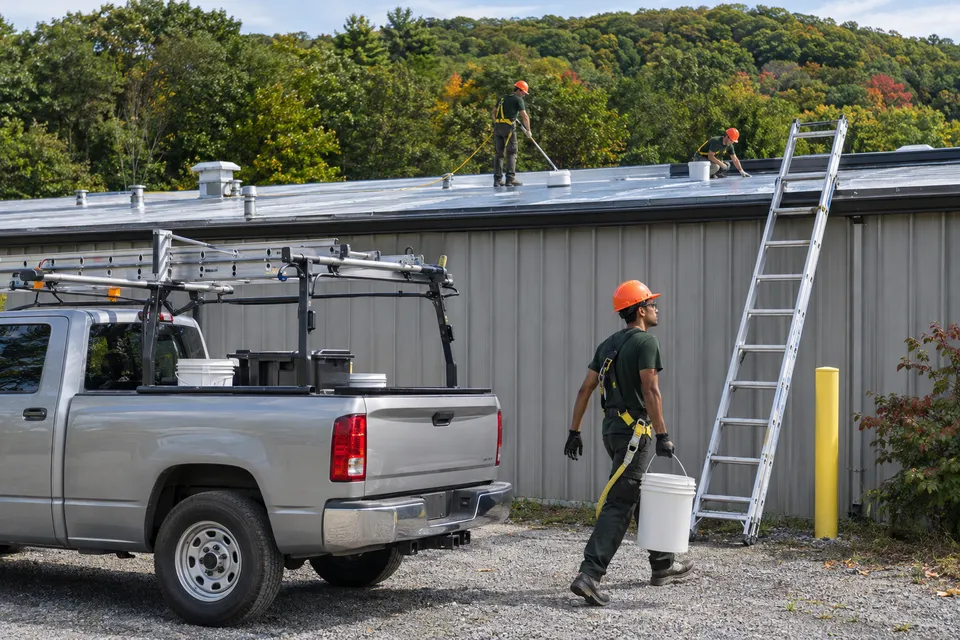
Sandy Hook metal roof coating work often happens on short roof runs squeezed between neighboring buildings, sidewalks, and shop doors. Ladder spots are limited, so we pick them before the job and keep them clear of entrances.
Coating pails and primer are staged in small batches on the roof or a rear lot. Front canopies are coated from the main roof or a ladder set at the end, keeping the walkway under them open.
Small mixed-use buildings in Sandy Hook show a familiar set of problems at canopies, party walls, and short panel runs.
Coating gives a small Sandy Hook commercial building a renewed roof without opening it up over shops and apartments.
Storefronts and upstairs units keep running because the panels stay in place.
Ladders and pails fit tight lots where a crane or dumpster has no room.
Rusted entry canopies are primed and coated so their edges stop flaking.
Coating ties into refastened flashing where the roof meets a neighbor's wall.
New oversized fasteners and coated heads close the holes along short runs.
Closing lap and flashing leaks keeps water out of apartments and offices above shops.
A white finish reflects summer sun off panels over small retail spaces.
Small coated roofs are easy to inspect and recoat when the time comes.
Sandy Hook roofs are small, but their slope, canopies, and surfaces still decide which of these five systems fits.
Primer and elastomeric coating over the steel panels, with screw lines, laps, and wall flashing sealed first. It is the usual fit for Sandy Hook storefronts and mixed-use buildings with short exposed-fastener runs.
Commercial metal roof coating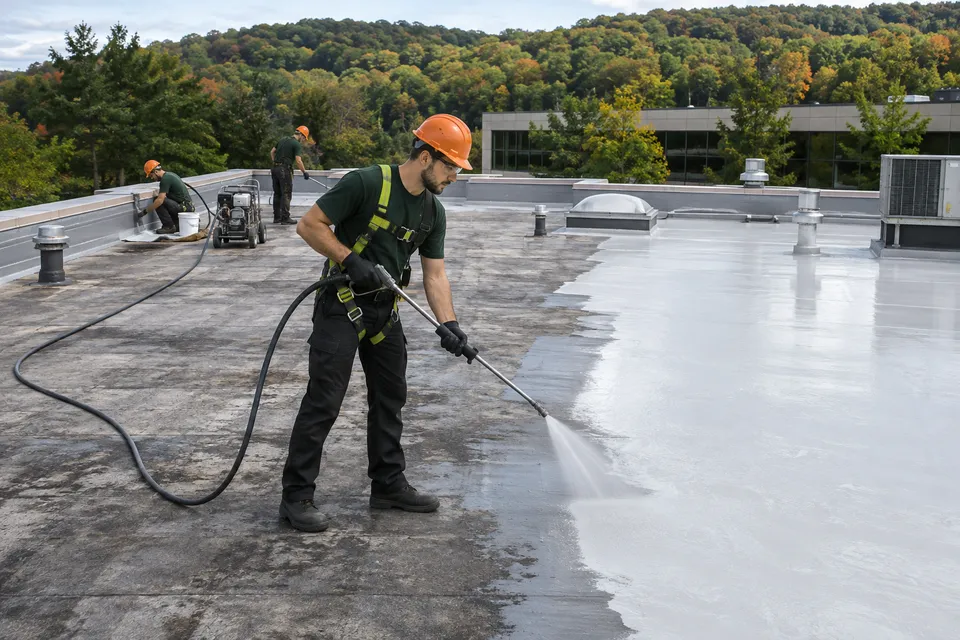
Works on near-flat rear sections and canopies where rainwater lingers. It can be rolled by hand from a few pails, which suits tight access, and later recoats stay with silicone.
Silicone roof coating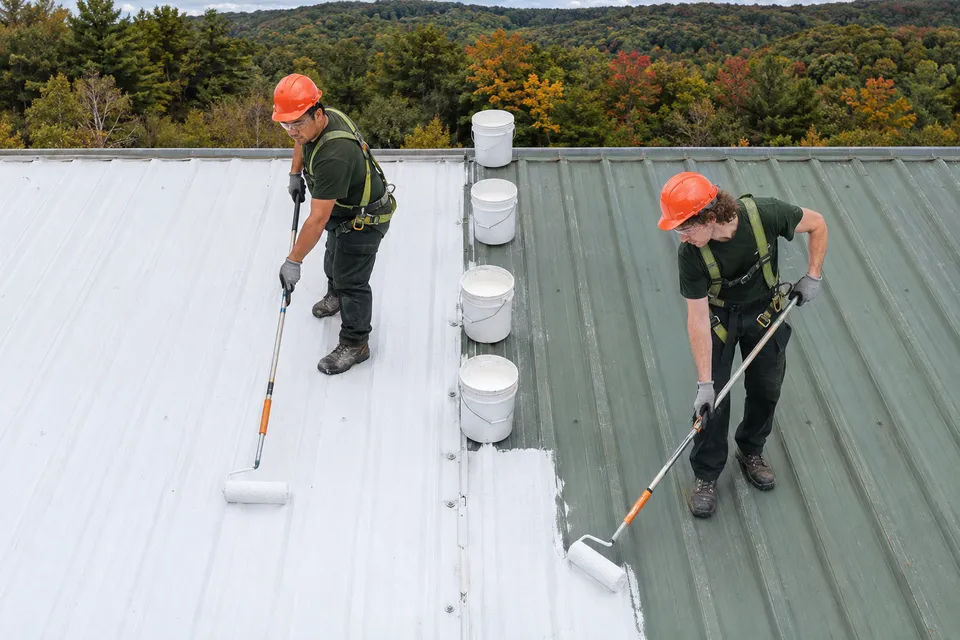
A water-based coating with easy cleanup near sidewalks and shop entrances. It fits pitched front roofs that shed water quickly and is applied in mild, dry weather.
Acrylic roof coating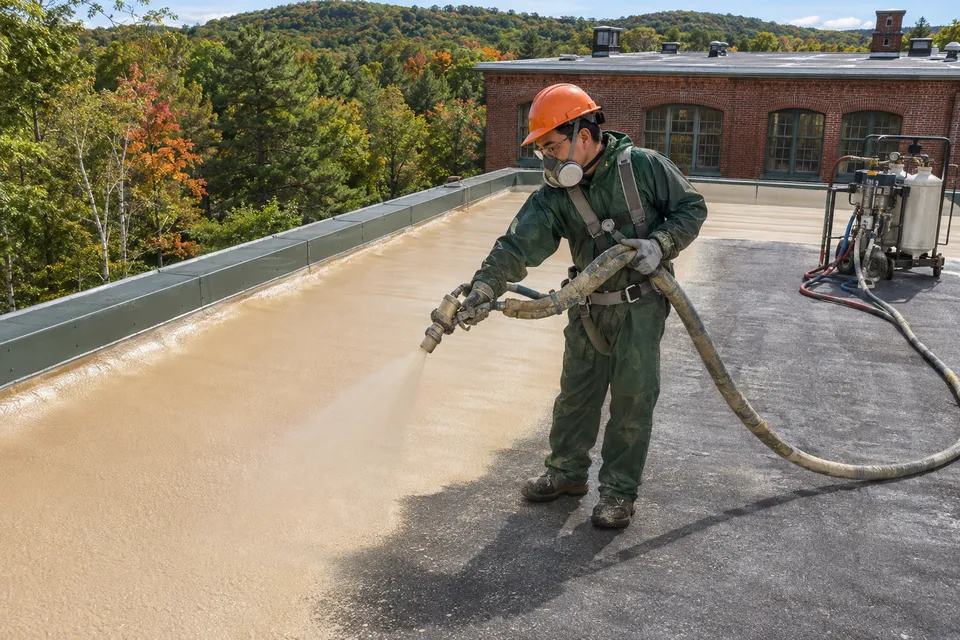
Insulates low-slope rear roofs over apartments or offices that run cold. On close-set buildings, spraying needs calm wind and full masking of neighboring walls, windows, and cars.
Spray foam roofing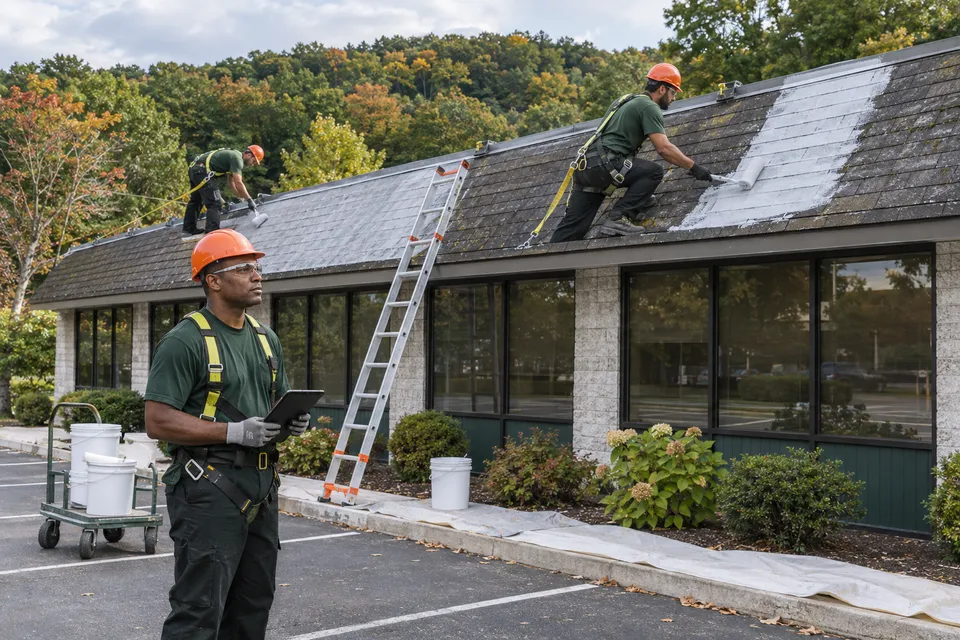
Restores shingle facades, mansards, and porch roofs on village commercial buildings while the shingles still lie flat. Any curled or missing pieces are replaced before coating.
Shingle roof coatingA drip at the shop door usually starts at the canopy edge or the wall flashing above it. Tell us where it lands and we will look there first.
Get A Free Ballpark EstimateHave These Ready
Five steps restore a Sandy Hook metal roof, planned around shop doors and limited space.
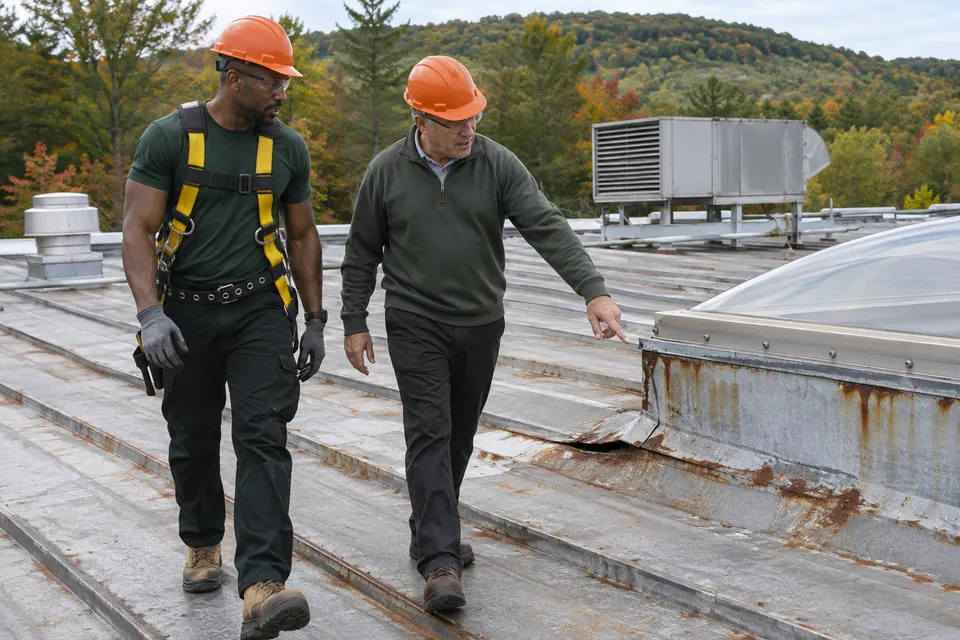
We check the panels, screw lines, canopy edges, gutters, and the flashing against neighboring walls, and we mark safe ladder spots that keep clear of doors, sidewalks, and parked cars.
Ladders go up at the rear or side and are tied off. Primer and coating arrive in small pail loads, staged on the roof or in a back lot so the storefront stays clear.
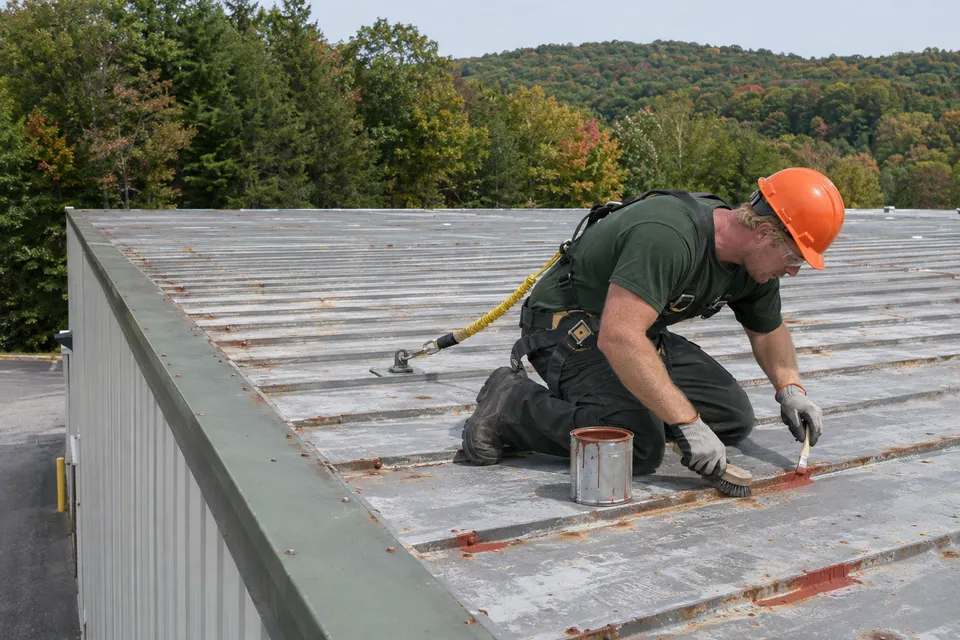
Party wall counterflashing is refastened and sealed, stripped screws are replaced with oversized ones, and gutter edges are resealed to the panels so the coating finishes on solid details.
Rust spots and canopy edges are brushed and primed. On short runs we roll base and finish coats by hand, building extra thickness at laps, wall joints, and canopy edges.
Wet film readings confirm the specified thickness on every section, including the canopy. Pails, ladders, and covers are removed, and the walkway is checked before shop doors reopen.
Along with Sandy Hook, we coat commercial metal roofs in the towns listed here.
Answers for owners of storefronts and mixed-use buildings in Sandy Hook.
Most Asked
As a ballpark, coating costs about $2.50 to $4.00 per square foot of roof area, and replacement about $5 to $8 per square foot. On small Sandy Hook roofs, canopy work, party wall flashing, ladder access, and how much material must be hand-carried shift the final price we set after a site visit.
We coat commercial metal roofs in Sandy Hook, New Fairfield, Branchville, Hawleyville, Gaylordsville, Bridgewater, Sherman, and Redding, plus Danbury and the towns next to it. For a building outside those areas, call and ask whether we can get to it.
Call us with the address and a description of the access. We plan ladder spots at the side or end of the building, carry materials up in small pail loads, and schedule ground work for hours when the sidewalk is quiet.
They should check the flashing where the roof meets neighboring walls, the canopy edges, and every screw line on the short runs. Leaks into upstairs apartments or offices usually trace to those spots, so we repair them before any primer or coating goes on.
Yes. Canopies are coated from the main roof or a ladder at one end, and we cover the walkway below while work is overhead. The door stays usable, and we time the coating for hours when customer traffic is lightest.
Yes. Small roofs take fewer pails and less time, and hand rolling keeps coating off sidewalks and neighboring walls. The same repair steps apply: fasteners, laps, and flashing are fixed first, then primer and coating go on to the specified thickness.
Tell us about your Sandy Hook storefront and its access, and we will set a time to walk the roof and canopy.