Dirt Rings In Low Areas
- You See
- Brown rings and algae where water sat after the last storm.
- What It Means
- The roof holds water there. Silicone tolerates it, but the drains and outlets get cleared first.
Low-Slope And Ponding Roofs
As a Danbury silicone roof coating contractor, we clean, prime, and spray silicone on low-slope commercial roofs where water lingers after storms.
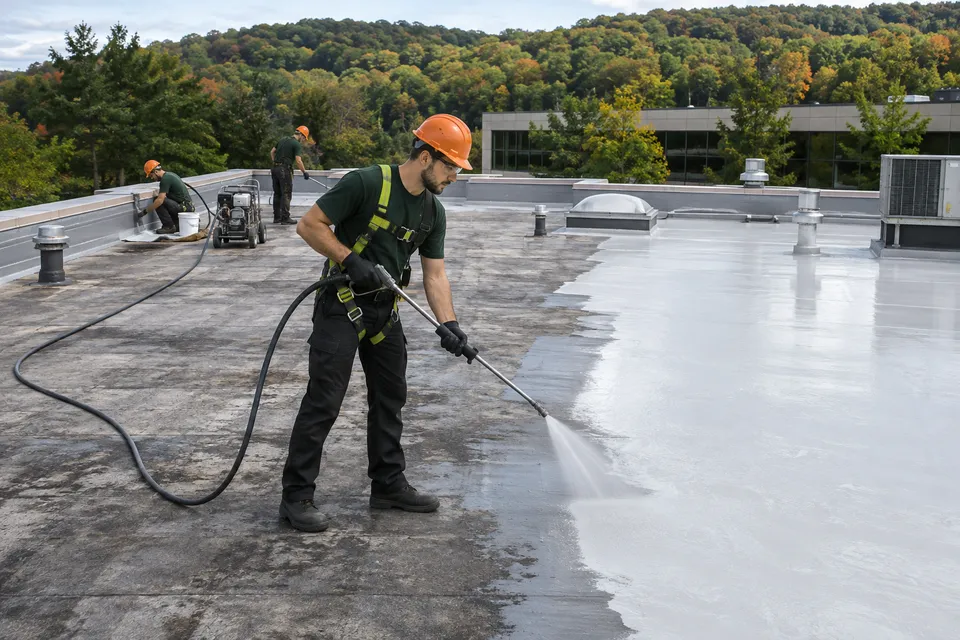
Danbury silicone roof coating fits roofs with slow drainage, as long as the surface below is dry and well attached. Check your roof against both columns.
| Roof Detail | Good For Silicone | Fix Or Rethink First |
|---|---|---|
| Drainage | Puddles that clear within a couple of days | Deep ponds over a sagging deck |
| Surface | Metal, single-ply, or old coating that bonds | Peeling coating or loose granules |
| Insulation | Dry when cored | Wet areas that need cutting out |
| Future Plans | Owner accepts silicone recoats | Plans to recoat with acrylic later |
| Foot Traffic | Light service visits | Daily traffic with no walk pads |
These conditions bring most low-slope roofs to silicone, and each one gets handled before the spray rig starts.
Silicone is one of several options. When a roof drains well or needs insulation, one of these fits better.
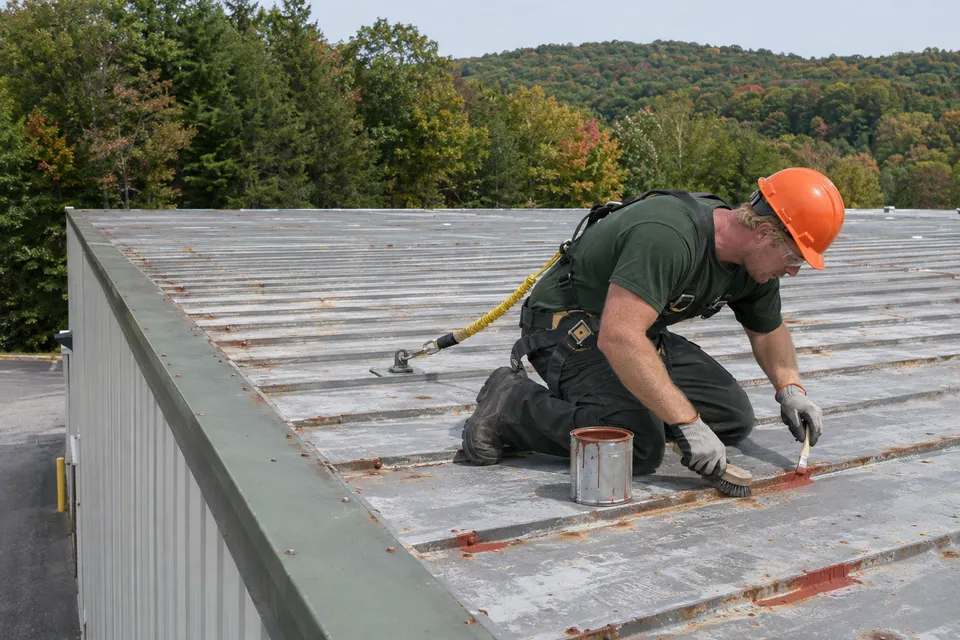
Pitched steel panels with surface rust and loose screws take this coating when water runs off instead of pooling.
Commercial metal roof coating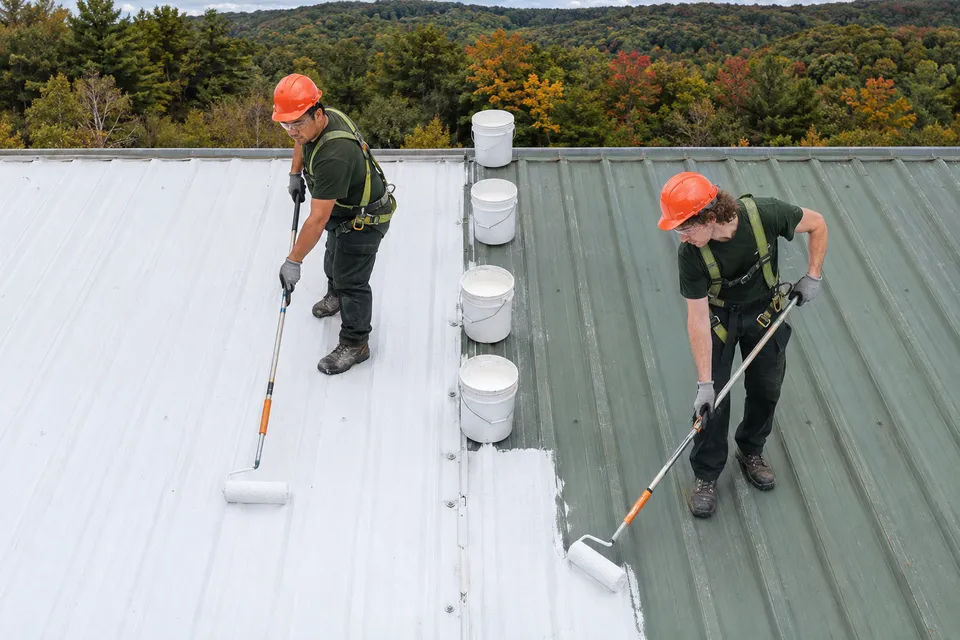
Roofs that drain fast and will be recoated with acrylic later suit it, applied during warm and dry weeks.
Acrylic roof coating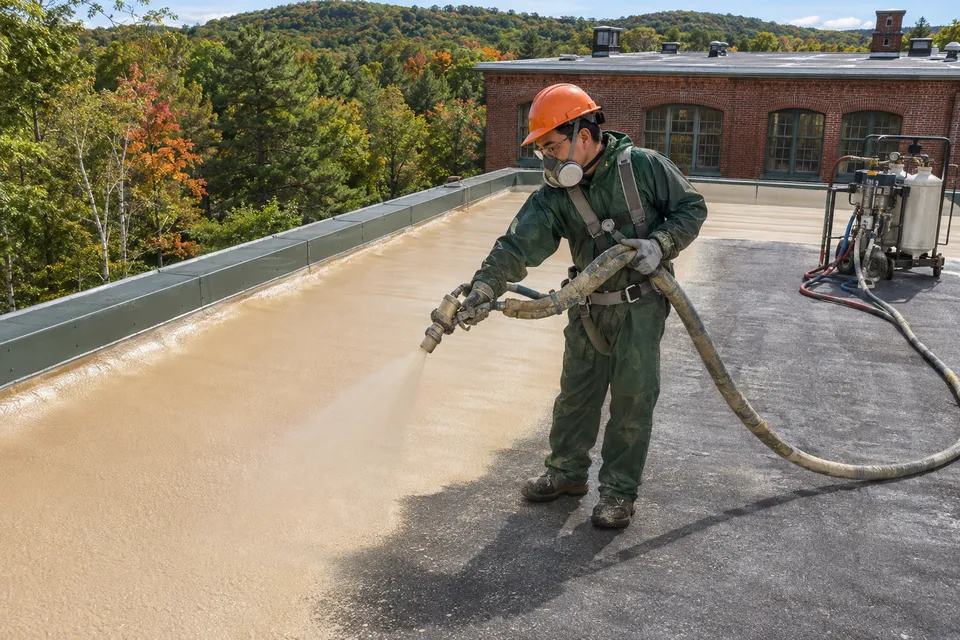
Flat roofs that need insulation and slope added go to foam, since foam can be built thicker toward drains.
Spray foam roofing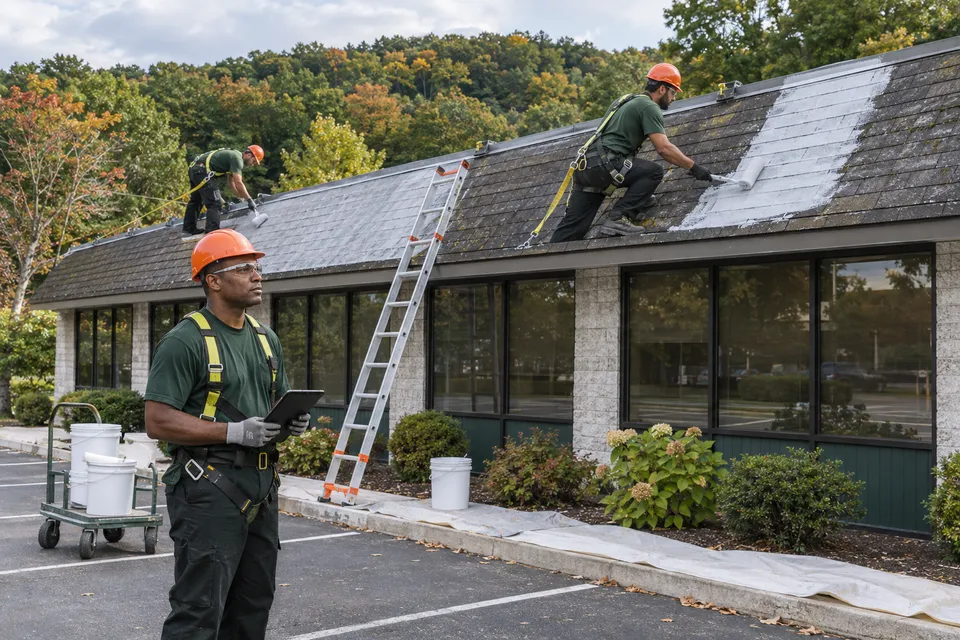
Shingle sections on the same building drain by slope, so they skip silicone and take a shingle coating.
Shingle roof coatingSilicone earns its place on roofs where water stays after rain or snowmelt.
Silicone holds up under water that sits in low spots for a day or two.
It keeps its flexibility through summer heat and ultraviolet exposure.
Many roofs get one heavy pass, which shortens time on the roof.
Laps and fastener lines disappear under one continuous membrane.
Silicone sheds light rain sooner after spraying than water-based coatings.
The existing roof is restored rather than torn off and hauled away.
It stays pliable when panels contract on freezing nights.
Future recoats go silicone over silicone after a cleaning.
Ponding is where silicone pays off, once the drains are clear and the insulation is dry. Start with the roof size and where water collects.
Get A Free Ballpark EstimateHave These Ready
Five steps take a low-slope roof from wet spots to a measured silicone coat.
We mark every low spot, core the insulation where water sits, check drains and curbs, and run adhesion tests on the existing surface.
Drains and outlets are cleared, wet insulation is cut out, and seams, screws, and flashings are repaired so water has no way in.
Pressure washing removes dirt and chalk; silicone needs a clean, dry roof to bond, so drying time is built into the schedule.
Rusted metal and some older surfaces get a primer, chosen by the adhesion test results rather than habit.
Silicone is sprayed at the specified rate, with wet mil readings taken across the field and extra material at seams.
Owners weighing silicone often look at these next.
Acrylic costs owners a recoat path that stays open to acrylic, but it needs a roof that sheds water.
Acrylic roof coatingSpray foam can be built thicker toward drains to move water off a flat roof.
Spray foam roofingRusting steel panels on pitched roofs take a primed elastomeric metal coating.
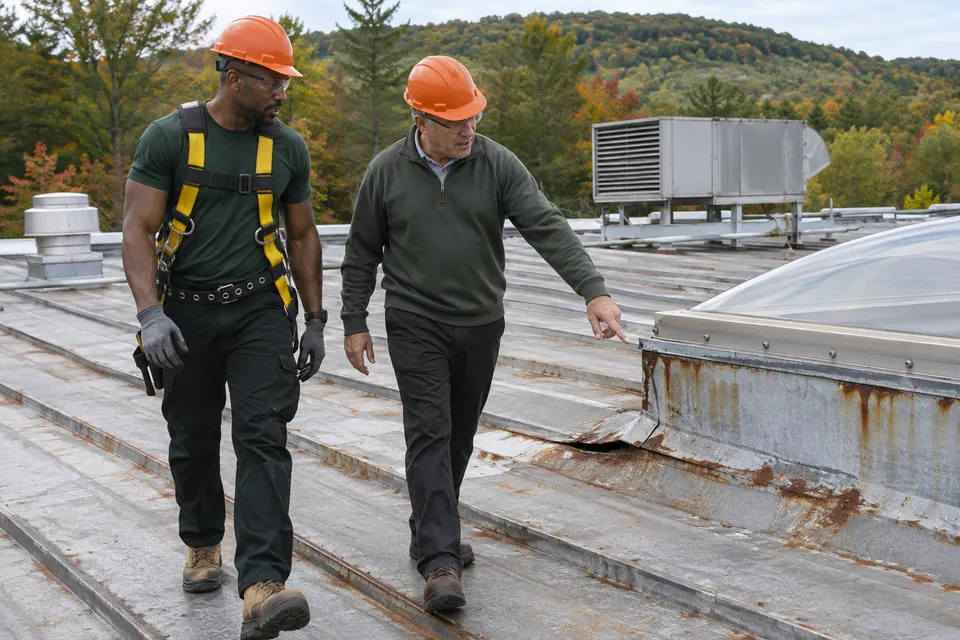
Commercial metal roof coatingAnswers on silicone for Danbury commercial roofs.
Most Asked
Silicone sits inside our coating ballpark of about $2.50 to $4.00 per square foot of roof area. Thicker mil specs, heavy rust prep, extra seam work, and many penetrations move a roof toward the top, while a large, clean roof with easy access lands lower.
Drainage decides. Silicone fits roofs where water stays after rain or snowmelt, and acrylic fits roofs that shed water fast and get coated in warm, dry weather. We look at slope, low spots near gutters, the surface, and the work season before choosing.
Silicone picks up dirt faster than acrylic, gets slick when wet, and can only be recoated with silicone. It also needs a clean, dry surface to bond, so owners should plan for a cleaning before any future recoat.
Most metal roofs get a base and a finish coat, or one heavier pass, built to the dry mil thickness the manufacturer specifies. Seams, fasteners, and penetrations get extra material first, and wet film readings during spraying confirm the specified mils over the whole roof.
The lease decides. Some put the roof on the landlord, while others shift roof upkeep to the tenant, so check which party it names for maintenance and replacement. Our inspection notes and photos can be shared with the other party.
Often, if the acrylic still bonds well. We wash the roof, run adhesion tests, and use a primer if the tests call for it. Peeling or powdery acrylic gets removed in those areas first.
Show us where the water sits, and we will core, clean, and price a silicone coat for your roof.